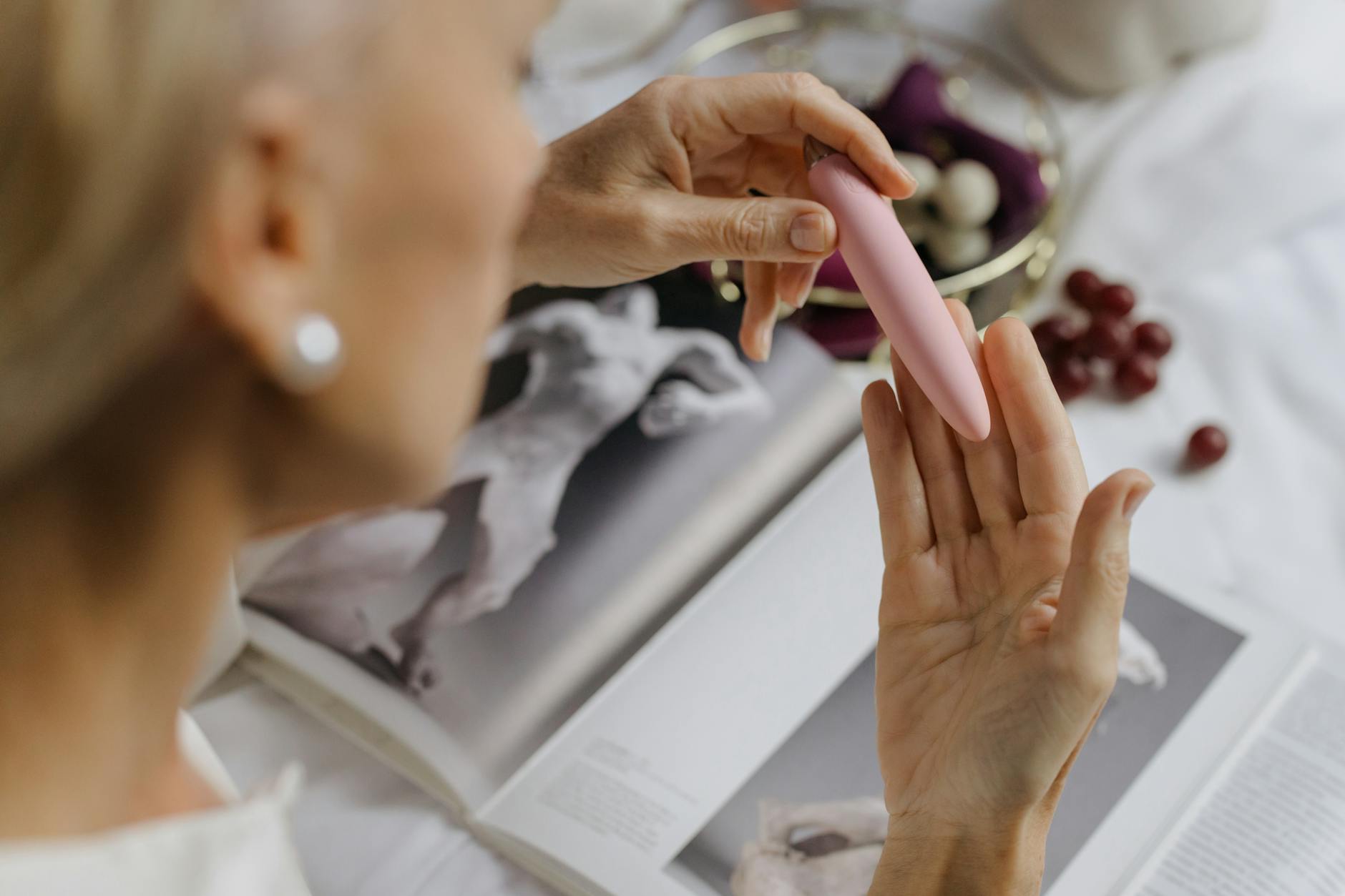
Let's talk about sensation past 55
Here's what nobody tells you: pleasure doesn't have an expiration date. But it does shift. In your late 50s, your body's been through a longer menopause (we're typically 5-10 years out by then), and estrogen stays lower. That's the physical reality. The opportunity part? You might have more clarity, permission, and knowledge of what actually works for you than you've ever had.
The sensation question matters because it's the first thing people worry about. Will touch feel muted? Will orgasms fade? The honest answer is: some things do shift, but not in the way you've probably been told.
What actually changes with clitoral sensation at 55+
The clitoris doesn't lose nerve endings. That's important to say clearly because it's false in almost every conversation about aging. What does happen is the surrounding tissue gets thinner, which can change how sensation travels. Direct friction might feel less pleasant. Indirect stimulation, suction, or gentler pressure often feels better.
This is why lemon vibrators work so well at this stage. The suction mechanism doesn't rely on that direct friction that can feel too intense on delicate tissue. Instead, it creates a pattern of sensation that engages the whole vulva without flattening it against something hard.
Your nerve sensitivity also depends on blood flow, which naturally decreases slightly with age. But here's the leverage point: arousal still brings blood to the area. Longer warm-up still works. It just looks different now. You're not broken. You're working with different biology.
The arousal timeline lengthens (and that's often good)
In your 20s and 30s, arousal might arrive in 5 minutes. At 55+, budget 20-30 minutes. This feels like a loss if you're comparing it to your younger self. But here's the reframe: shorter arousal times often mean more reactive, less chosen pleasure. Longer arousal gives you more time to settle into what you actually want. Many people find that feels less obligatory and more genuinely satisfying.
With a lemon clitoral vibrator, the longer warm-up matters because you have time to feel out the different intensity settings. Start at pattern 1. Spend 10 minutes there. Let your body register the sensation before moving to something stronger. This patience often leads to more nuanced, complex orgasms.
One client in her late 50s told me she felt like she'd been speeding through sex her whole life, and suddenly she had permission to slow down. That permission changed everything.
Orgasm shape changes (often for the richer)
Orgasms in your late 50s often feel different than they did at 30. Shallower sometimes, but also more concentrated. The pelvic floor has less estrogen support, which changes the muscular sensation during climax. Some people report that contractions feel less pronounced. Others find they're more localized and intense.
The sensation you might lose: that full-body, radiating pleasure wave. The sensation you might gain: a really focused, almost meditative intensity. Neither is better. They're just different flavors of the same thing.
A lemon sucker's suction-based approach can actually highlight this concentrated pleasure. Instead of the broad stimulation you might get from traditional vibrators, you're working with a more targeted mechanism that can feel cleaner, less numb, and easier to dial in to exactly what your body needs in that moment.
Sensitivity to touch evolves everywhere
It's not just the clitoris. At 55+, skin sensitivity changes all over the vulva. Labia can feel less plump (less estrogen means less fluid retention), so light touch might feel less pleasant than medium pressure. Your thighs, breasts, and inner arms still respond, but they might need slightly more deliberate contact.
This is why the foreplay conversation matters more now than ever. Partner sex shifts from "let's warm you up quickly" to "let's explore what actually lands for you now." If you're working with a partner, naming this shift takes the weirdness out of it. It's not rejection. It's geography.
If you're with yourself, you have total freedom to experiment. Try a lemon vibrator with a longer, slower progression. Notice what different settings feel like. You might discover that pattern 3 was always your sweet spot, but you were always too rushed to notice.
The role of hormones beyond estrogen
Estrogen gets all the attention, but progesterone and testosterone matter too. Both drop further in your late 50s, which can dampen desire. Here's the thing though: desire and sensation are not the same. You can feel something intensely without wanting it desperately. Sometimes sensation comes first, and desire builds from that.
If desire has flatlined, that's worth bringing to your doctor or therapist. Testosterone therapy is an option in some places. HRT adjustment might help. But if sensation feels fine and desire is just quieter, that might be normal aging, life stress, or relationship fatigue wearing a hormonal disguise.
The conversation to have with yourself: does the sensation still feel good when you're stimulated? If yes, you're working with sensation. If no, you might need a different approach, a conversation with your partner, or professional input.
Lubrication: still essential, still worth being strategic about
Genitourinary syndrome of menopause (GSM) often persists into your late 50s and beyond. Your body makes less natural lubrication. This is completely normal and completely treatable. Water-based lubrication is your friend. Silicone-based feels richer but can degrade silicone toys, so stick with water-based.
Here's a pro move: lube generously, wait a minute, then start. Your vulva will warm up the lube and help it distribute. Then start with the lowest intensity lemon vibrator setting. Your tissue is more delicate at this point. You want stimulation, not trauma.
Some people find that regular use (a few times a week) helps maintain genital blood flow and tissue health. Others find less frequent use feels better. There's no rule. Your body will tell you.
Why some sensation shifts feel like a loss but aren't
You might notice that a vigorous touch that felt incredible at 35 feels abrasive at 55. That's not numbness. That's a change in what your tissue can comfortably handle. It's actually useful information. Your body is saying, "I prefer gentler now." Honor that.
The lemon clitoral vibrator design actually anticipates this. Suction-based stimulation doesn't rely on the kind of pressure-based vibration that can feel harsh on thinner, more sensitive tissue. It's not a compromise. It's often an upgrade.
Movement and sensation
At 55+, your pelvic floor muscle tone changes. This affects everything. A tighter pelvic floor can make sensation feel more intense (sometimes too intense). A relaxed pelvic floor can make sensation feel muted. Most people are somewhere in the middle, and most benefit from paying attention to pelvic floor health.
Kegels help, but so does the opposite. Learn to relax your pelvic floor completely. Some people use breathing exercises. Some use visualization. Some use a pelvic floor physical therapist if tension is a real issue. This alone can transform sensation.
When you're using a lemon vibrator, checking in with your pelvic floor is key. Are you tensing? Release. You'll feel the stimulation more clearly.
The mental piece that changes sensation
At 55+, you often have fewer distractions than you did at 25. Kids are grown. Career anxiety might feel less pressing. You know yourself better. This mental clarity alone changes sensation. You're not half-listening for a knock on the door. You're not running through tomorrow's to-do list. You're just here.
This is the piece that matters most. Physiological shifts are real, but your capacity to be present and aware is often sharper in your late 50s than it's ever been. That presence amplifies sensation in ways that no toy can on its own.
When sensation loss signals something to address
If sensation has completely disappeared and isn't returning with stimulation, talk to your doctor. Topical estrogen cream can sometimes help. So can testosterone. So can addressing medication side effects if you're on antidepressants or blood pressure meds that affect sensation.
Sensation loss paired with pain is different. Pain during sex shouldn't be ignored. Talk to a gynecologist or menopause specialist. This is treatable.
If sensation is fine but desire is gone, that's a conversation with a therapist or relationship counselor. Those are different problems with different solutions.
Trying lemon vibrators for the first time in your late 50s
If you've never used a clitoral vibrator before, your late 50s is actually a great time to start. You know your body. You're not operating under anyone else's expectations. You know what feels good and what doesn't. A lemon clitoral vibrator is gentler than many options. Start with the lowest setting. Spend 15-20 minutes exploring. Notice what patterns feel best.
Many people report that after years of not prioritizing pleasure, having a tool that actually works for their current body feels like permission they didn't know they needed. That matters more than the mechanism.
The pleasure gains nobody talks about
Here's what I see clinically: people in their late 50s often have more satisfying sexual experiences than they've had in decades. Not because of better bodies. Because of better knowledge, better partners or self-awareness, less shame, and lower stakes. You're not performing. You're not proving anything. You're just exploring.
Sensation changes are real. But they're not the story. The story is that you get to redefine what pleasure means now, with the body you have, the time you're willing to spend, and the kind of stimulation that actually works. That's often more generous than what you had before.
FAQ
Can lemon vibrators help with sensation that feels dulled by antidepressants?
Antidepressant-induced numbness is real and frustrating. The good news: it's sometimes reversible by adjusting your dose or medication. Talk to your prescriber first. In the meantime, lemon vibrators might help because they create a very different kind of stimulation than traditional vibrators. The suction mechanism can sometimes bypass the numbness and reach nerves that respond to pressure rather than vibration. This doesn't work for everyone, but it's worth trying if you're already on medication you need.
Does sensation get worse if I use a lemon vibrator regularly in my late 50s?
Not inherently. The question is whether your body is getting enough recovery time and stimulation variety. If you use the same intensity every single time, yes, you might habituate. If you vary the patterns and intensities, your body stays responsive. Some people use lemon vibrators a few times a week and maintain great sensation. Others use them less frequently. There's no magic number. Pay attention to what feels fresh versus what feels numb, and adjust from there.
Is the sensation different if I use a lemon vibrator alone versus with a partner?
Completely different. Partner involvement adds anticipation, touch, and psychological engagement that changes sensation. Some people find partnered use feels more intense. Others find solo exploration gives them more control. Both are valid. If you're in a couple, having both experiences matters. Solo time teaches you what you want. Partnered time teaches you how to communicate it.
Will a lemon clitoral vibrator feel uncomfortable on my sensitive tissue at 55+?
Not usually, which is partly why they work so well at this stage. The suction mechanism is gentler than direct vibration on thin, fragile tissue. Start with the lowest setting and work up. Use plenty of water-based lubrication. Stop if anything hurts. Sensation is supposed to feel good, not sharp or raw. If it does, you're using it wrong or it's the wrong tool for your body. Either way, adjust.
Can sensation come back if I feel like I've lost it?
Often yes. It depends on whether the loss is physical or mental. Physical: topical estrogen, testosterone therapy, medication adjustment, pelvic floor work, or better lubrication can help. Mental: less pressure, longer warm-up, stress reduction, therapy for relationship issues, or just permission to take longer. Most people benefit from tackling both angles at once.
What's the difference between numbness and just needing longer arousal time?
Numbness: you touch yourself and feel nothing. You're stimulated and there's no response. You used to feel sensation here and now you don't. Longer arousal: stimulation lands, but it takes 20-30 minutes instead of 5. You feel sensation building gradually. The pathway is just slower. That's not numbness. That's age. Very different problems. Numbness needs investigation. Longer arousal needs patience and good foreplay strategy.
The bottom line
At 55+, your body is different. Your clitoris still works. Your capacity for pleasure still exists. The mechanism might feel different. The timeline might stretch. The texture of orgasm might shift. None of that means you've peaked. It means you've evolved. A lemon vibrator designed for gentler, suction-based stimulation often aligns perfectly with what your body needs now. If you haven't explored your pleasure with intention in a while, this might be the moment to start. Your late 50s aren't the end of that story. They're often the chapter where it gets actually good.