Let's be real about the silence
You want to tell your partner what feels good. You want to ask for what you need. But the words stick somewhere between your brain and your mouth, and suddenly you're lying there pretending everything's fine when it isn't. Communication about pleasure breaks down in relationships all the time, and it's rarely because people don't care. It's because vulnerability around sex hits different. Shame lives there. Fear of judgment. The worry that wanting something specific means something's wrong with you or your relationship.
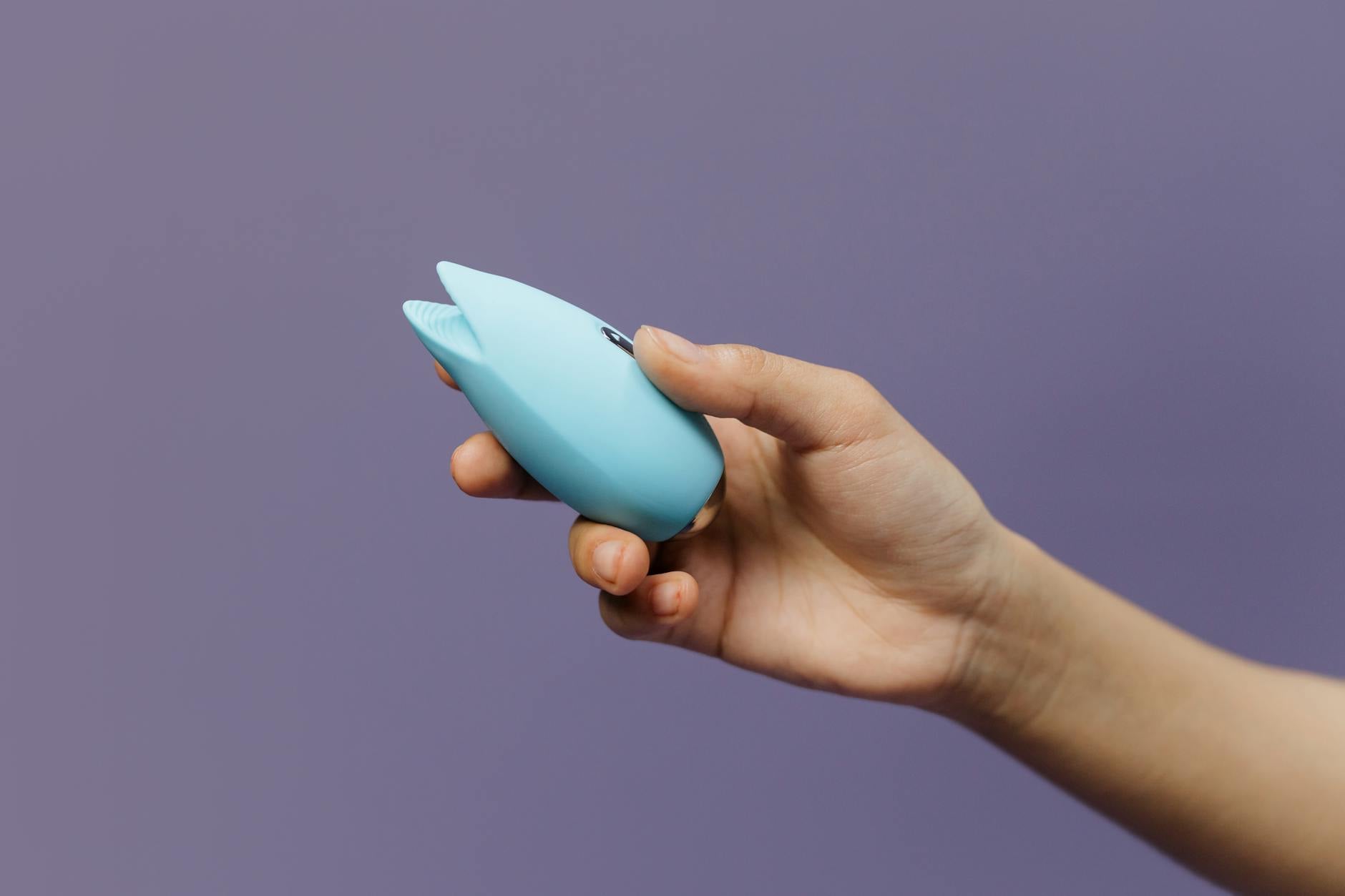
Here's what I see in my practice: couples who can talk about money, kids, work stress—who can fight and make up—often freeze completely when pleasure comes into the room. The irony is that introducing the right tool, like a lemon clitoral vibrator, can actually unlock that conversation instead of replacing it.
Why words fail (and tools don't)
There's a reason many couples find it easier to explore sensation together than to articulate desire. Words require you to package something deeply personal into language, which means risk. You have to be specific. You have to sit with your partner's reaction. A tool—especially something as intuitive as a lemon vibrator—lets you communicate through experience instead.
You can show your partner exactly what pace works. What pattern. What intensity. You can both feel it happening in real time. That shared experience becomes a conversation without words. And often, once the tension breaks and you both discover that pleasure isn't dangerous or weird, the actual words come easier. You've already shown up honestly. Speaking up is just the next step.
The other piece: introducing sensation can feel safer than introducing a direct request. "Let's try using something together" is less loaded than "You're not doing this right" or "I need more here." The focus shifts from performance anxiety to exploration. From judgment to curiosity.
Starting the conversation (yes, there still is one)
Okay, so you still need to say something. But it doesn't have to be huge.
"I've been thinking about trying something new together. Would you be open to that?" That's it. Most partners will say yes out of sheer curiosity, especially if you frame it as something for both of you, not a criticism.
If your partner seems hesitant, ask why. Sometimes the resistance isn't about the vibrator itself. It's about feeling replaced, or a belief that toys mean they're not enough. That's the real conversation to have. Reassure them: pleasure tools amplify what already exists between you. They don't substitute. Many couples find that adding sensation actually creates more closeness, more confidence, more desire. You're both learning what works. You're both invested in the outcome.
If you need permission to want this: you have it. Your pleasure matters. Your partner's willingness to explore matters. And if they're not willing after an honest conversation, that's information too—and worth examining with a therapist or counselor.
How to actually use a lemon clitoral vibrator together when talking feels hard
Start with both of you clothed. Let your partner hold the lemon vibrator first (or a similar Hello Nancy toy) and explore it. No pressure to do anything with it yet. Get comfortable with the weight, the sounds, the patterns. Let your partner understand what it does and how gentle or intense it is.
Then, when you're both ready, move into foreplay. Use it externally, on yourself first, while your partner watches. This does two things: it shows them what you like without having to narrate it, and it takes the pressure off them to perform. You're demonstrating, not critiquing.
Let your partner observe your breathing, your responses. They'll start to notice what makes you respond. That's the nonverbal feedback loop. Then invite them to use it with you. They'll already have a sense of what feels good based on what they just saw.
The lemon vibrator's suction pattern is particularly good for this because it's consistent and doesn't require constant repositioning. Your partner isn't hunting around trying to find the right angle. They can focus on presence instead.
What happens when you actually finish together (the bigger conversation)
Something shifts after shared pleasure. The walls soften. You're both vulnerable, and you both survived it. That's significant. In my experience, couples who use this pathway—sensation first, words later—often find the verbal conversation flows more naturally afterward.
You might start with simple feedback: "That felt really good when you..." or "I loved how you used the different patterns." Not heavy. Just specific, appreciative detail. Your partner gets confirmation that they did something right, which matters more than you might think. And you get to practice being specific about pleasure without the same fear attached.
Over time, this becomes the new language. You learn to say "faster here" or "stay on this pattern a little longer." The lemon vibrator isn't a conversation stopper. It's a conversation starter that doesn't require you to speak first.
When silence is its own problem
I want to flag something important: a lemon clitoral vibrator can bridge a communication gap, but it can't fix a relationship where emotional intimacy is completely absent. If you and your partner feel disconnected on every level—you don't talk, you don't touch, there's resentment—adding sensation won't solve that. It might actually highlight how far apart you've drifted.
In that case, the vibrator can be a tool to restart the conversation, but you'll likely need actual help. A couples therapist who specializes in intimacy can guide you through the vulnerable parts. Cognitive behavioral therapy and the Gottman Method both have excellent frameworks for rebuilding emotional and physical connection. Don't use a toy to avoid the harder work if the relationship really needs it.
But if you're a couple who generally loves each other and just got stuck around this one thing—communication about sex—then yes. A lemon clitoral vibrator is exactly the kind of tool that can unlock it.
The permission you might not realize you need
Your partner might worry that you're bored. That you're not attracted to them anymore. That wanting sensation means something's wrong. None of that's true. Wanting to explore pleasure is about expanding what you already have, not rejecting it. But your partner needs to hear that from you, even if the vibrator helps you show it first.
So after that first shared experience, circle back. "I love exploring this with you. This isn't about anything missing. It's about both of us getting more of what we want." Your partner probably needs reassurance just as much as you need to express yourself. That's how the real conversation starts.
FAQ
How do I bring up the idea of using a lemon vibrator if we've never talked about toys?
Start simple and frame it as curiosity, not criticism. "I read about these clitoral vibrators and got curious. Would you ever want to try something like that together?" If they ask why, be honest but not heavy. "I think it could feel good for both of us" works. You're not diagnosing a problem. You're proposing an experience.
What if my partner feels threatened or inadequate?
That's a real feeling, and it deserves real conversation. Listen to what they're actually afraid of. Often it's "Will you still want me?" or "Does this mean I'm not enough?" Reassure them that the vibrator is about sensation, not replacement. Many partners find that watching or participating in their partner's pleasure is actually sexy and confidence-building. You might discover they feel more desired, not less.
Can a lemon vibrator actually replace difficult conversations?
No. It can make them easier to start, but you still need to talk. Use the tool to build confidence and shared positive experience, then lean into the words. "I really liked how that felt. I want to keep exploring things that feel this good together." That's the conversation continuing, not being replaced.
What if we try it and it doesn't help communication?
That's fine. Not every tool works for every couple. But notice what happened. Did your partner seem uncomfortable? Did they withdraw after? Did you both feel disconnected? Those are clues about what the real barrier is. Sometimes communication fails because there's a deeper intimacy issue—resentment, grief, a feeling of being unseen. The vibrator just revealed it. That's actually useful information for a therapist.
How do I know if we need professional help vs. just trying a lemon vibrator?
Ask yourself: Do we talk about anything else? Do we touch non-sexually? Do we make eye contact? If yes to those, a vibrator might genuinely help unlock the pleasure conversation. If no, you probably need couples therapy first. The vibrator won't fix contempt or emotional distance. But a skilled therapist can help you rebuild the foundation, and then tools like these become useful rather than desperate.
Can we use a lemon clitoral vibrator solo first to practice talking about it?
Absolutely. In fact, I recommend it. If you explore alone first, you'll know exactly what you like, which makes the partner conversation way easier. You're not discovering together from a place of fumbling. You're showing them something you've already learned about yourself. That's powerful and removes a layer of vulnerability that can block communication.
What comes next
Introducing sensation doesn't have to be a huge milestone or a loaded conversation. Sometimes the most powerful shift happens quietly. You try something together. It feels good. You both realize that exploring pleasure doesn't have to be scary or complicated. And suddenly, asking for what you want feels a lot less impossible.
Start where you are. Use a tool to show what words can't. Let the conversation unfold naturally after that. If you're stuck deeper than communication, reach out to a therapist who specializes in couples work. Your pleasure, and your connection, deserve that investment.