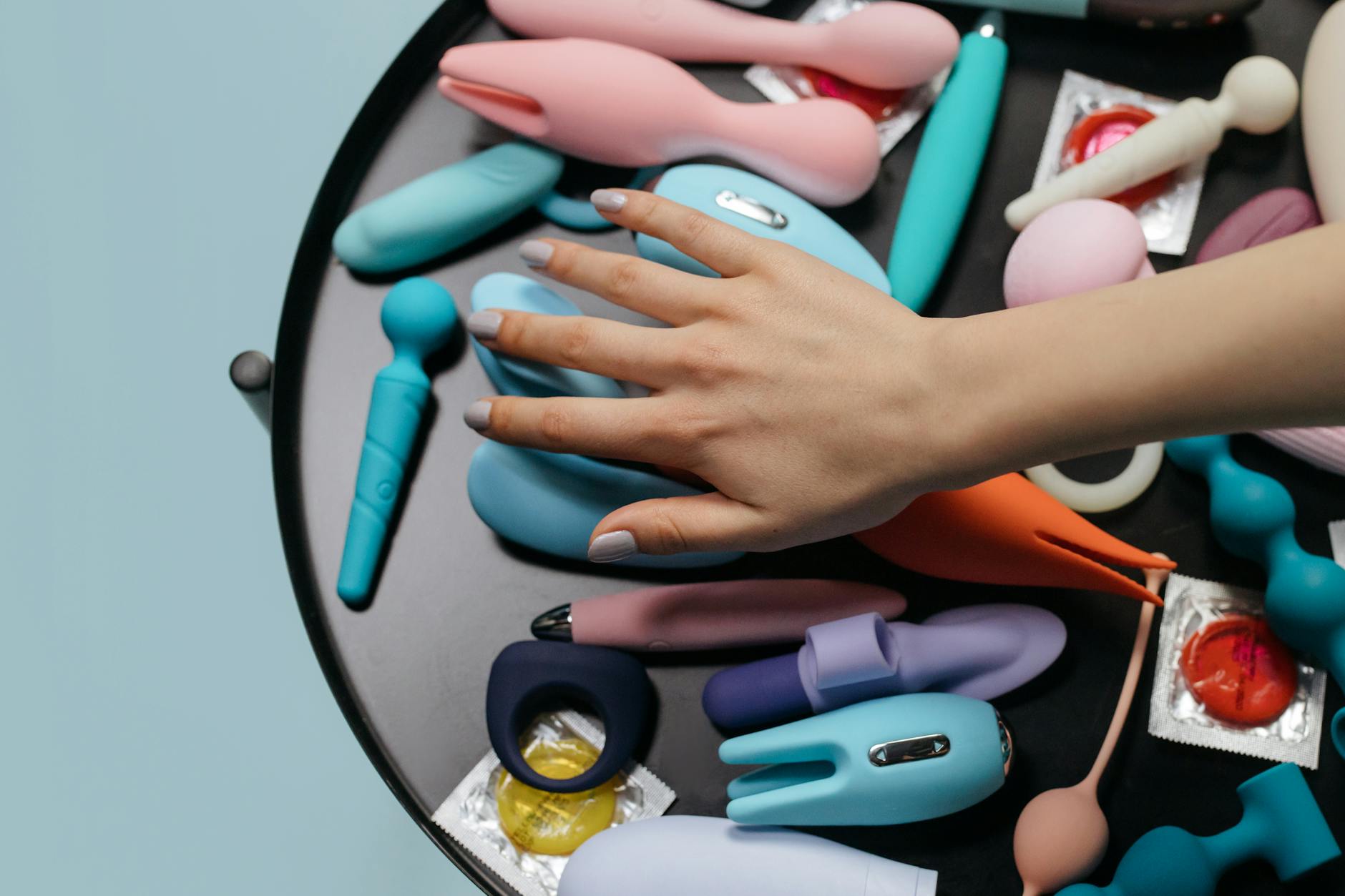
Let's talk about what stress actually does to desire
Honestly? It's not that stress kills your libido. It hijacks your nervous system. When you're in survival mode—mortgage worries, family conflict, looming deadlines—your brain isn't thinking about pleasure. It's thinking about threat. Your body follows suit. Arousal becomes impossible not because you don't want your partner, but because your nervous system is convinced it's the wrong time to relax.
The guilt that follows is almost worse than the stress itself. You love your partner. You want to want them. But the gap between desire and reality starts to feel permanent. It isn't.
Why desire disappears (and why you're not broken)
Three things happen physiologically when chronic stress shows up:
Your cortisol stays elevated. This suppresses both testosterone and dopamine—the neurochemicals that fuel desire and pleasure response. Your vagal tone (the nervous system's ability to shift from "fight or flight" to rest) tanks, making relaxation feel impossible even when you finally carve out time together. Your pelvic floor tightens—a physical mirror of emotional bracing that makes arousal feel blocked or numb.
None of this is a character flaw. It's not a reflection of how much you care. It's your body doing exactly what it's designed to do: prioritize safety over pleasure when it perceives a threat.
The plot twist? Using a clitoral vibrator during this phase isn't selfish—it's actually the fastest way to signal to your nervous system that it's safe to relax. Pleasure is a nervous system reset button.
How lemon vibrators fit into stress recovery
Lemon clitoral vibrators like the Lem work particularly well during high-stress periods for one specific reason: they require minimal effort and maximum sensation. When desire is fragile, friction-based stimulation can feel like one more task your body has to perform. Suction-based vibrators bypass that. They wake up sensation without demanding anything from you.
Here's what matters: during stress, your clitoris might feel numb or distant. Not because it's damaged, but because your nervous system has essentially dimmed the lights. A well-designed clitoral vibrator—one that uses suction and varied patterns—can gradually reawaken sensation without the pressure of "you should be aroused now."
When you use a lemon vibrator during this phase, you're not trying to force desire. You're creating conditions where desire can safely return.
The solo step first (yes, really)
I know what you're thinking: shouldn't I rebuild this with my partner? And yes, eventually. But the fastest path back to partnered pleasure runs through solo pleasure first. Here's why.
When you're stressed, using a vibrator alone lets you practice arousal without the pressure of someone else's timeline or expectations. You can take fifteen minutes to do absolutely nothing but feel your body. You can use a lemon vibrator on the lowest pattern and work up—or not work up at all. There's no performance required.
Try this: set aside twenty minutes with zero interruptions. Use a water-based lubricant and start with pattern one or two on your Lem or another clitoral vibrator. The goal isn't orgasm. The goal is sensation. Notice what happens to your nervous system when you allow yourself to feel something pleasurable without an endpoint.
Most people find that after two or three solo sessions, something shifts. Not instantly, but gradually. Your nervous system starts to remember that relaxation is possible. That pleasure exists on the other side of stress.
Bringing it back to your partner
Once you've spent a few sessions reconnecting with your own pleasure, you can bring a lemon vibrator into partnered time. This is where the conversation piece comes in. You're not handing your partner a vibrator and saying "fix this." You're saying, "I want to rebuild this together, and this tool helps me get there."
Start simple. On a relaxed evening (not when you're already in bed trying to have sex), tell your partner what you've noticed: that stress has made arousal harder, that you've been using solo time to ease back in, and that you'd like their help when you're ready. Most partners are relieved to hear this framed as "here's what helps me" rather than "here's what you're not doing."
When you do explore together, here's the setup: use a lemon clitoral vibrator while your partner touches you elsewhere—your neck, your breasts, your inner thighs. The vibrator does the clitoral work while your partner stays present and connected. This distributes the arousal labor (you're not waiting for them to manually stimulate you) while keeping the intimacy intact.
The patterns that matter during stress recovery
Your nervous system is still cautious. Overwhelming patterns—the ones that feel almost aggressive—can actually trigger that fight-or-flight response all over again. Start with steady, slower patterns. Most clitoral vibrators like the Lem have lower settings designed for exactly this moment: gentle suction, consistent rhythm, nothing jarring.
After a few sessions, you can experiment with varied patterns. But there's no rush. The patterns that feel good are the ones that feel like a slow invitation, not a demand.
Timing it right in the stress cycle
Here's something counterintuitive: you don't wait until stress disappears to rebuild desire. You rebuild desire while managing stress. Because managing stress alone is slow, and desire is the fastest way to shift your nervous system.
The best time to use a lemon vibrator is when stress is still present but manageable. Not during the crisis moment. Not when everything feels okay again. In between. When you've got a quiet evening but your shoulders are still tight. When your partner is home and you're both exhausted but trying.
That's when a fifteen-minute session with a clitoral vibrator does real work. It signals to your body that recovery is possible. That pleasure and stress can exist in the same life without one erasing the other.
What to expect as you rebuild
Desire won't return like a light switch. It'll come back in phases. You might have one good session and then nothing for two weeks. You might have an afternoon where arousal builds slowly, then stalls. This isn't failure. This is normal nervous system re-regulation.
Your clitoris might feel sensitive one day and almost numb the next. Your orgasms might feel different—softer, more internal, less intense. All of this is your body recalibrating. Keep using a lemon vibrator. Keep showing up with your partner. The consistency matters more than the intensity.
Most couples find that within six to eight weeks of regular solo and partnered play, desire starts to feel less like a mountain and more like a natural rhythm again. The stress doesn't have to be gone. But the pleasure response starts working alongside it instead of freezing in opposition to it.
The piece nobody mentions: forgiveness
You might need to forgive yourself for the months when desire disappeared. For the times you said no or felt resentful. For guilt that had nothing to do with your actual feelings. That's part of the process too.
Using a lemon clitoral vibrator isn't about fixing what stress broke. It's about proving to yourself that your body still works, that pleasure is still possible, that you're worth reconnecting with.
Frequently asked questions
Can I use a lemon vibrator if I still feel numb?
Yes. Start on the lowest pattern and just use it for sensation, not for orgasm. Numbness during stress is common, and gentle, consistent stimulation is how you coax sensation back. Give it three to five sessions before expecting feeling to return. Your nervous system needs reassurance that it's safe to wake up.
Should my partner be in the room the first time?
Not necessarily. Many couples find that solo exploration first, then shared exploration later, works better. It removes the pressure of performance and lets you rediscover your own body on your own timeline. Once you feel comfortable, bring your partner in.
How often should we use a clitoral vibrator if we're rebuilding intimacy?
Start with two to three times per week—solo or partnered. Consistency matters more than frequency. You're retraining your nervous system that pleasure is safe and available. That happens through regular, gentle practice, not through intensity.
What if orgasm still doesn't happen?
Orgasm isn't the goal right now. Sensation is. Arousal is. The ability to relax your nervous system is. Once those return, orgasm usually follows. But if you're using a lemon vibrator and experiencing pleasure without climax, that's already a win.
Is it normal for desire to fluctuate even after we rebuild it?
Completely. Stress will always affect desire. That's human physiology. The difference is that once you've rebuilt the pathway, you know how to access pleasure again. You know that a lemon vibrator can help. You know your partner is there. Fluctuation becomes manageable instead of catastrophic.
Can we use a vibrator without talking about the stress that caused this?
It helps if you do. A lemon clitoral vibrator is a tool for pleasure recovery, but it works better alongside some honest conversation about what stressed you both out and how you want to move forward. You don't need a therapist's office. You need fifteen minutes where you both say, "I notice this has been hard, and I want it to get better."
The bottom line
Stress kills desire temporarily. Not permanently. Not fundamentally. When you use a lemon vibrator during the recovery phase, you're not forcing anything back to life. You're creating safe space for your nervous system to remember that relaxation and pleasure are possible. Your partner is still there. Your body still works. Desire is waiting on the other side of the stress.
The path back isn't guilt or pressure. It's patience, conversation, and the willingness to explore pleasure gently, together.