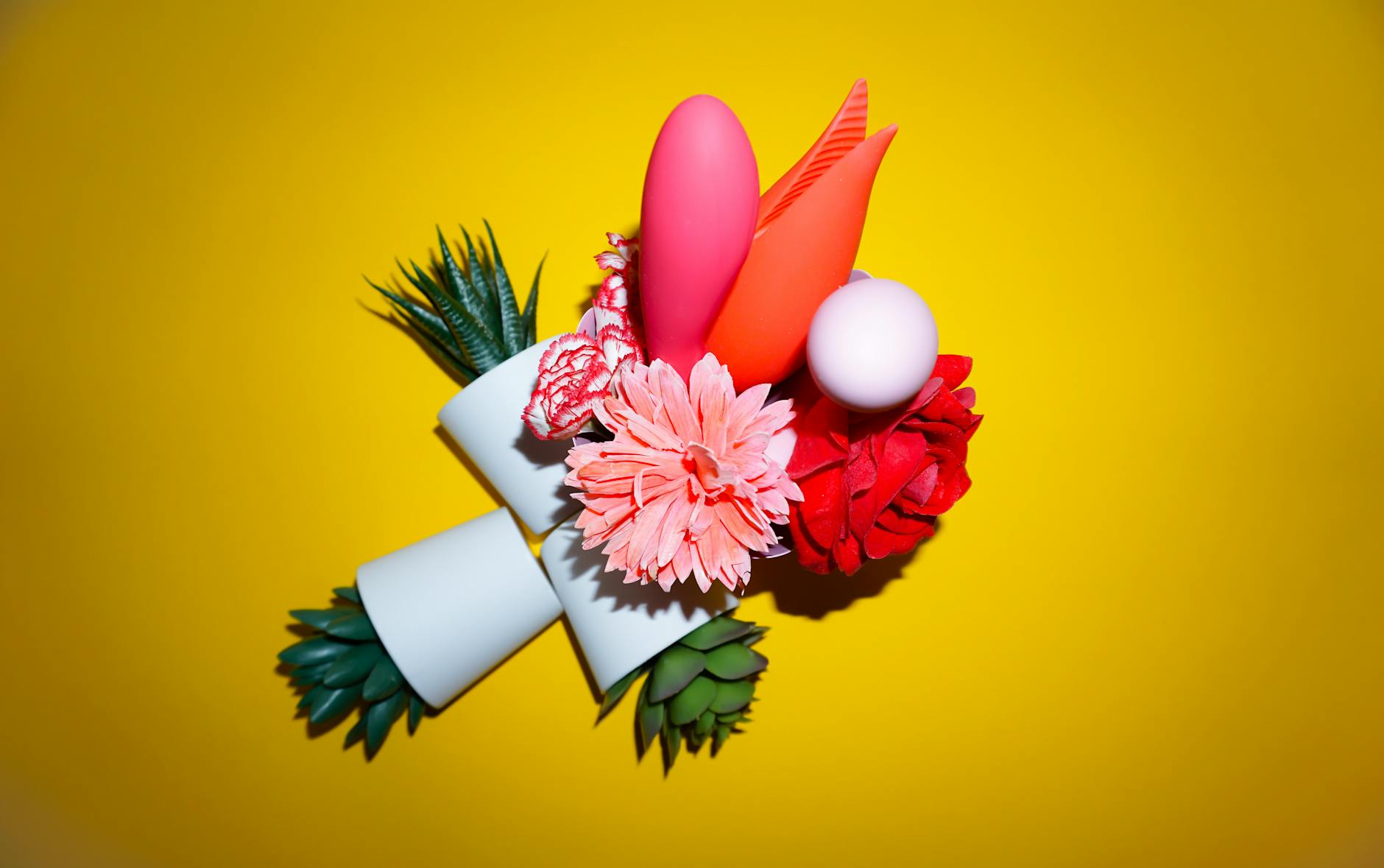
Your clitoris speaks hormone language
Here's the thing nobody explains clearly: your clitoris doesn't have one sensitivity setting. It has dozens, and they shift with your cycle, your stress levels, your medications, and your life stage. What felt perfect last week might feel too much today. That's not a malfunction. That's biology being wildly specific.
The tricky part? Most vibrators are built as one-speed hammers. They don't adapt. But the lemon clitoral vibrator is engineered differently. Its suction-based stimulation means you're not battering a single nerve cluster with the same brutal rhythm. Instead, you're creating a gentle pressure wave that can be fine-tuned to match exactly where your sensitivity is on any given day.
Understanding this difference transforms your whole approach to pleasure when hormones are in flux.
How hormones actually change clitoral sensitivity
Let's map out what's actually happening biologically. Your clitoris has roughly 8,000 nerve endings, and estrogen directly affects the blood flow and tissue thickness that determine how responsive those nerves are. In the days after ovulation, when estrogen dips, many people notice their clitoris feels less reactive. Some describe it as numb. Others say it just needs more buildup.
Conversely, in the high-estrogen window around ovulation, the same touch that felt gentle earlier in the cycle can suddenly feel intense. Progesterone adds another layer. High progesterone makes the clitoris feel less sensitive overall but sometimes more prone to deep, achy pleasure rather than sharp sensation.
Then there's the variable nobody talks about: cortisol. When you're stressed, cortisol spikes and can suppress your estrogen response dramatically. That's why you might notice your clitoris feeling almost muted during a difficult work week, even if your cycle timing suggests otherwise.
The practical upshot: your clitoral sensitivity isn't random. It follows patterns. And once you start tracking those patterns, you can match your lemon vibrator technique to what your body actually needs.
Why suction-based stimulation is your ally when sensitivity shifts
Traditional vibrators deliver the same percussive force regardless of tissue sensitivity. The Lem works differently. It creates a gentle suction cup effect that surrounds the clitoris without the direct hammering of a regular vibrator head. This matters enormously when sensitivity is in flux.
When your clitoris is ultrasensitive (high estrogen days, or just after stopping certain medications), you can use the Lem on its lowest patterns and feel incredibly satisfied without that overwhelming "too much" sensation. The suction distributes stimulation across a wider tissue area, so there's no concentrated pressure point.
When sensitivity has dropped (low estrogen, high stress, or antidepressant side effects), you can gradually increase the pattern intensity without worrying about irritation. Because you're not using direct vibration, you're less likely to overstimulate and desensitize further.
This flexibility is what makes lemon clitoral vibrators so valuable during hormonal transitions. You're not buying a new toy for every phase. You're buying one tool that actually adapts.
Day-by-day technique adjustments through your cycle
If you track your cycle (and honestly, for sensitivity management, it's worth it), you can get precise about how to use your lemon vibrator each phase.
Days 1-5 (Menstruation). Progesterone is tanking, estrogen is building. Many people feel neither particularly sensitive nor particularly numb. This is a great time to experiment with mid-range patterns on the Lem and pay attention to what feels right. Use lube generously. The pelvic floor often holds extra tension during this window, so warm up slowly.
Days 6-12 (Follicular). Estrogen is rising steadily. Your clitoris is likely becoming more reactive. Now is when you might dial down to patterns 1-2 on the Lem if you normally use 3-4. Notice if what felt good last week now feels slightly over-stimulating. That's not a problem. It's information. Adjust down.
Day 13-14 (Ovulation). Peak estrogen. Peak reactivity. Your clitoris is maximally sensitive. If you're someone who normally uses mid-range patterns, try going lower and using longer sessions. The suction gives you more granular control than a traditional vibrator would allow. Spend 20-30 minutes if you have it. The pleasure threshold is higher, but the window for satisfaction is also wider.
Days 15-28 (Luteal). Progesterone rises, estrogen drops off. Sensitivity generally decreases through this phase. Many people feel their clitoris "pulling back" around day 18-20. This is when boosting intensity slightly on your lemon vibrator often makes sense. Don't feel like you're doing something wrong. You're just compensating for a physiological shift. Some people add vibration to penetrative stimulation during this phase, something the Lem coordinates well with.
When medications and stress override your cycle
Here's the awkward reality: your cycle isn't the only variable. Antidepressants, birth control, antihistamines, and anxiety meds can all dial down clitoral sensitivity independent of where you are in your cycle. So can sleep deprivation, relationship stress, work pressure, or grief.
If you're on an SSRI and notice your clitoris feels muted across all cycle phases, that's a known side effect. The Lem can help you work around it, but the tool alone won't fix the underlying issue. What often helps: using the Lem on higher patterns, building in longer warm-up sessions (15-25 minutes instead of 5-10), and being patient. Your nervous system is literally processing more slowly.
If you're going through a high-stress period, you might notice your clitoris feeling less reactive across the board. Again, this is your body's appropriate response. The Lem can help you feel pleasure even in a dampened state, but the real fix is managing stress. Sometimes pleasure isn't the solution to stress. Sometimes managing stress is the solution to pleasure.
The key is knowing the difference between "my sensitivity is hormone-shifted and I need to adjust my technique" and "something deeper is going on and technique adjustment won't fully help." If you're stuck in the second camp, that's when a conversation with a good therapist or doctor matters.
Building a flexible routine that honors monthly shifts
Instead of a static technique, try a monthly check-in practice. Once a week, spend 15 minutes with your lemon vibrator and pay attention. What pattern feels best today? What's your clitoris telling you about where it's at? Is it eager or reserved? Does it want sustained pressure or pulsing waves?
Many people find that tracking sensitivity alongside cycle tracking reveals patterns they didn't expect. Maybe your most intense pleasure doesn't happen at ovulation. Maybe it's day 7, or day 21. Maybe high progesterone phases actually give you the deepest orgasms even though sensitivity feels lower. Those are valuable discoveries about your own body.
The practical upside: you stop fighting your hormones and start collaborating with them. Some weeks your lemon clitoral vibrator is a sprinter tool. Some weeks it's a marathon. Both are legitimate.
Signs your sensitivity shift needs professional attention
Most hormonal sensitivity shifts are normal. But a few warrant a conversation with a healthcare provider. If your clitoris suddenly goes completely numb and doesn't recover over a full cycle, that's worth flagging. If you experience sharp pain or burning sensation that wasn't there before, don't assume it's normal. If you've started a new medication and your clitoris feels numb in a way that's genuinely distressing, mention it to your doctor.
Genitourinary syndrome of menopause (GSM) is real. PCOS can affect clitoral tissue. Certain pelvic floor conditions can create sensation changes. These are treatable. A good provider will listen, not dismiss.
Your pleasure matters. Your clitoral sensitivity matters. And hormones are doing legitimate physiological work, not personal sabotage. Once you understand that your lemon vibrator can meet you wherever your hormones have landed.
People also ask
Does clitoral sensitivity change every month?
Yes. Estrogen and progesterone fluctuations mean your clitoris is more reactive some days and less reactive others. Most people with cycles notice sensitivity peaks around ovulation and drops during the luteal phase. Stress, sleep, and medications layer on top of this natural rhythm, creating individual variation.
Can I use the Lem vibrator every day if my sensitivity keeps changing?
Absolutely. The Lem is designed for frequent use. The real question is pattern intensity and session length, not frequency. What you're adjusting is your technique, not your usage. Some people use lemon clitoral vibrators daily. Others prefer 3-4 times weekly. Both are fine.
What's the difference between low sensitivity and numbness?
Low sensitivity means your clitoris responds, but it takes more time, more stimulation, or a different type of pressure to get there. Numbness means you're not feeling sensation clearly at all, almost like a disconnect between touch and experience. Low sensitivity is usually managed with technique adjustments. Numbness is worth discussing with a provider, especially if it's sudden or accompanied by pain.
Does hormonal birth control actually change how lemon vibrators feel?
Yes. Hormonal birth control suppresses natural estrogen and progesterone fluctuation, so your clitoral sensitivity stays relatively flat throughout the month instead of shifting weekly. This means you don't need to adjust your Lem technique as frequently. Some people feel this is liberating. Others miss the variation. Both reactions are valid.
Can I make hormones work better for pleasure by timing my toy use?
Definitely. If you understand your cycle and know that your clitoris peaks in sensitivity around day 12-14, you can dedicate longer, more exploratory sessions to that window. You can use those high-sensitivity days to experiment with patterns or techniques you normally wouldn't. You're essentially working with your biology instead of against it.
Is it normal for orgasms to feel different at different points in my cycle?
Completely normal. High-estrogen orgasms often feel more localized, more clitoral, quicker to arrive. High-progesterone orgasms often feel deeper, more full-body, and take longer to build. Neither is better. They're just different flavors of pleasure. Once you notice this, you can actually lean into each phase and appreciate what it's offering instead of wishing it was the other phase.