
Here's the thing about long-term partnerships and sex
After ten, twenty, or thirty years together, intimacy often follows a script. Same position. Same rhythm. Same time of week. It's efficient, predictable, and absolutely deadly to desire. You're not broken. You're not less attracted to your partner. What's happened is that your nervous system has stopped paying attention because there's nothing new to signal.
The irony is that you know each other's bodies better than anyone. You have trust, history, and genuine affection. But those things, on their own, aren't enough to keep pleasure alive. Novelty is. And when novelty disappears, sensation does too.
Why routine kills arousal (and it's not what you think)
When sex becomes predictable, your brain literally stops tracking it. A phenomenon called "habituation" means repetition dulls neural response. The same touch that excited you in year two registers as background noise by year fifteen. Your partner touches you the same way, and your clitoris doesn't fire up with the same urgency. Not because you've fallen out of love. Because your body has stopped expecting anything surprising.
Meanwhile, you're probably both operating under the assumption that this flatness means attraction has faded or that one of you wants it less. That's the narrative that keeps couples stuck. They interpret loss of novelty as loss of desire, when it's actually the opposite problem: they need more novelty, not less sex.
Research on long-term couples shows that introducing new elements into shared intimacy, even small ones, resets arousal. Your brain can't habituate to something it doesn't fully predict.
What a lemon clitoral vibrator actually does in this context
A lemon vibrator, or lem vibrator, is not a replacement for your partner. It's a circuit-breaker. It's a clear signal that tonight is different. That sensations will arrive in a pattern your body hasn't numbed itself to. That you're not running the same program.
Hello Nancy Avo's lemon clitoral vibrators use air-suction technology, which stimulates differently than hands or traditional vibration. If you've spent twenty years with penetration-focused or friction-based touch, suction wakes up nerve endings that have been background actors. It's novel in a neurological sense, which means your arousal system wakes up.
Introducing a lemon sucker into partnered sex also creates psychological permission to pause and focus on external pleasure. Many couples who've been together for decades have defaulted to penetration or hand stimulation while the receiver lies relatively still. A lem vibrator demands presence from both partners. It's collaborative in a way that breaks the old script.
Breaking the script without breaking trust
This is where it gets delicate. If you've been having the same kind of sex for a decade and you suddenly suggest a vibrator, your partner might interpret it as criticism ("You don't satisfy me") or rejection ("I need something else"). That's why framing matters.
Start with curiosity, not complaint. "I've been thinking about trying something that might feel different for both of us" is different than "We need to change this because it's not working." One is an invitation. The other is an indictment.
Explore the lemon vibrator together first. Solo, that's fine. But in this context, novelty works best when it's shared discovery. Let your partner hold it. Let them see how it works. Let them experiment while you respond, so they're not surprised by your pleasure. They're part of creating it.
If your partner initially resists, don't interpret that as rejection of the vibrator. They might be resisting the implication that the old way wasn't enough. That's a conversation worth having outside the bedroom. "I'm not saying we've been doing it wrong. I'm saying I want us both to feel something new."
How to actually use the lem vibrator when routine is the problem
Think of this in three phases.
Phase one: Solo exploration. Use the lemon clitoral vibrator alone first. Get familiar with the sensation. Notice which patterns and intensities actually wake up your arousal. This isn't about achieving an orgasm. It's about learning what your body responds to when external pressure isn't part of the equation.
Phase two: Partnered foreplay. Introduce it early. Use it for ten to fifteen minutes before your typical script kicks in. Let your partner watch and touch you while the vibrator works. This resets expectations. They see that your pleasure can look different than they've been assuming.
Phase three: Integration. Once the novelty wears off (and it will, because your nervous system adapts to everything), you've already broken the script. You can now play with combinations: vibrator plus penetration, vibrator while you're kissing, vibrator alone while your partner is inside you. The specifics matter less than the fact that you're collaborating on sensation instead of running an autopilot routine.
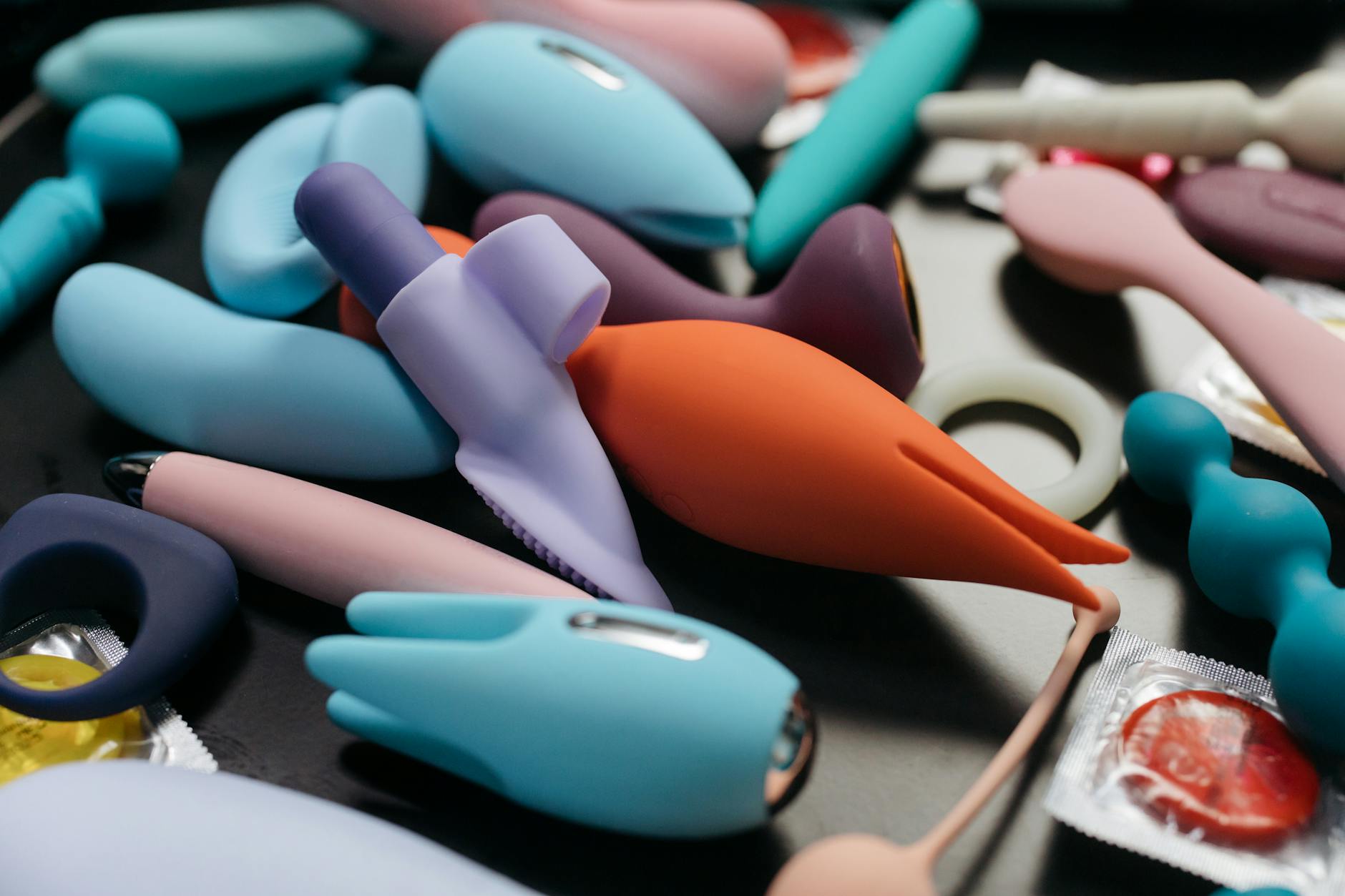
Photo by cottonbro studio on Pexels
The conversation that matters more than the toy
Introducing a lemon vibrator into a stalled intimate life will only work if both partners are actually willing to reconsider what sex is supposed to do. If you're both still operating from "sex is about achieving orgasm together in a familiar way," then the toy is just a band-aid.
But if you're willing to reframe it as "we want to feel alive together again," then lemon adult toys become a tool for reconnection, not a workaround.
That conversation might sound like: "I miss feeling like we're discovering each other. I'd love to try something that makes us both pay attention differently." Not every partner will immediately embrace this. Some need reassurance that you're not bored with them, just bored with predictability. Those are two different things.
When to use it, and when not to
Don't pull out the lemon vibrator when you're already frustrated or disconnected. That signals desperation, and desperation kills desire faster than routine does. Introduce it during a time when you're both relaxed and interested in each other. Weekends. After you've had a good conversation. When the kids are asleep and you have actual time.
Don't use it as a standalone solution to deeper relationship problems. If communication is broken, resentment is high, or you're both checked out, no toy fixes that. You need to address the relational stuff first. Then, once you're reconnected, the lem vibrator becomes a way to deepen that reconnection.
Do use it when you're curious. When you're willing to be a little vulnerable. When you're ready to admit that the old way works, but it doesn't feel alive anymore.
What changes when you actually introduce novelty
The first time you use a lemon clitoral vibrator with your long-term partner, something shifts. Your partner pays attention differently. Your body responds to a sensation you've spent years not experiencing. Your arousal system wakes up because there's actual novelty present.
That shift doesn't last forever. In six months or a year, the lem vibrator will feel normal. Routine will creep back in. And that's okay. Because now you know that the problem was never your partner or your attraction. It was habituation. And you know how to fix that.
Most couples who introduce novelty deliberately find that it changes not just their sex life but the entire tenor of their connection. When you're paying attention during sex, you're present. When you're present, you actually see your partner. When you see them, the intimacy deepens.
Lemon vibrators, lemon sucker technology, and other intentional additions aren't about replacing what you have. They're about remembering why you wanted it in the first place.
FAQ: Rekindling Intimacy With Lemon Vibrators
Why would a vibrator help if the problem is that we're bored with each other?
You're probably not bored with each other. You're bored with the pattern. A lemon vibrator breaks the pattern, which gives your nervous systems permission to wake up. The newness works physiologically, which often shifts the emotional experience too. It's not about the toy. It's about using the toy to signal that things are different tonight.
What if my partner thinks a vibrator means I'm not satisfied with them?
That's a conversation to have before you introduce the toy, not after. Be clear: "I want to try this because I want us to feel something new together, not because I'm unsatisfied." Some partners need reassurance multiple times. That's normal. Their ego might be wrapped up in the idea that they should be enough on their own. Gently separate the concepts. They can be enough and you can still want novelty. Those aren't contradictory.
How do I know if a lemon clitoral vibrator is better than other vibrators for this situation?
Air-suction technology stimulates differently than traditional vibration. If your routine sex has primarily involved hands or penetration, suction sensation feels genuinely different neurologically. That difference is what resets habituation. If you've been using vibrators together already, a lem vibrator might feel fresher because of how the sensation arrives.
What if we try it and the novelty wears off quickly?
It will. Your nervous system adapts to everything. That's not failure. That means you've reset the baseline and can now experiment with combinations, timing, and context. Once you've broken the autopilot script once, you're more likely to keep breaking it. Novelty becomes something you actively create instead of something you wait for.
Is this going to solve our relationship issues?
No. If you're disconnected, resentful, or not communicating, a vibrator won't fix that. It might actually highlight the problem by making you realize how much you've been avoiding real conversation about intimacy. Use it as part of reconnection, not as the whole solution. If there are deeper issues, you might benefit from working with a couples therapist or counselor alongside exploring this.
How do I bring this up without making it awkward?
Bring it up outside the bedroom, when you're both relaxed. Frame it around what you want (novelty, reconnection, that feeling of discovery) rather than what you don't like about the current situation. If your partner seems hesitant, ask why. Listen without defending. Sometimes resistance is about insecurity. Sometimes it's just about adjustment. Either way, talking about it is the only way through.
After years of the same rhythm, the same positions, the same evening schedule, intimacy can feel like a habit instead of a connection. That's not a reflection on your relationship. It's how human nervous systems work. Novelty fades. Habituation kicks in. Arousal flattens.
A lemon vibrator won't save a relationship that's broken in other ways. But it can absolutely interrupt the autopilot script that's been running in your bedroom for a decade. It can remind both of you that you're capable of surprising each other. That you can still discover something new together.
That's not about the toy. That's about choosing to stay curious about each other instead of settling for comfortable.
If you're ready to explore what reconnection might feel like, start with the conversation. Everything else follows from there.
Ready to rethink intimacy in your relationship? Let's talk.