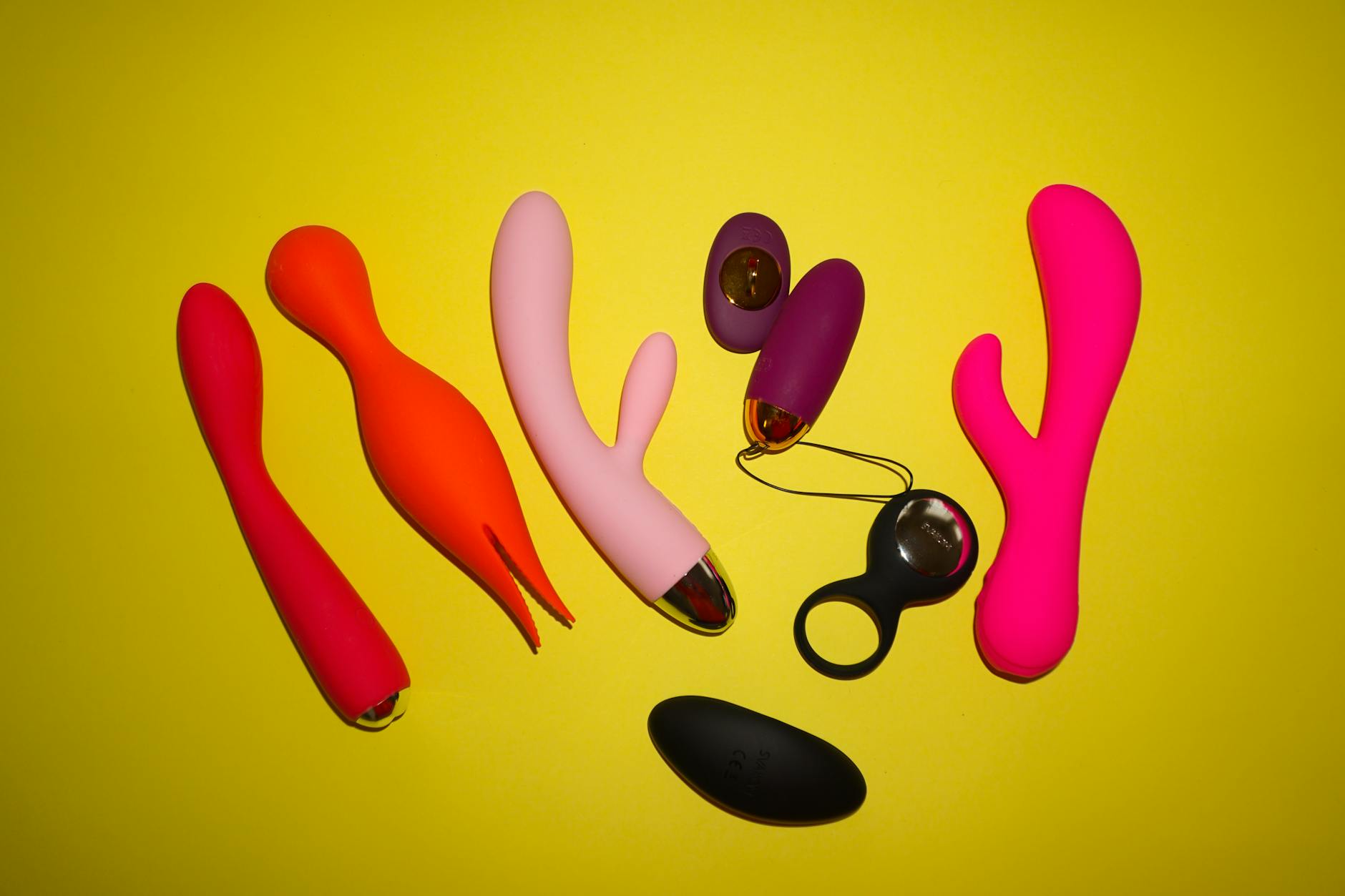
Here's the thing about arousal mismatch
One of you gets turned on the second you walk into the bedroom. The other needs fifteen to twenty minutes of foreplay, mental settling, and getting into their body. Neither of you is broken. You're just wired differently. And if you've been trying to force the same timeline on both your bodies, you're probably both frustrated.
This is one of the most common friction points in long-term partnerships, and almost nobody talks about it directly. Instead, partners either rush to catch up (which kills actual arousal), or they shut down entirely (which kills intimacy). There's a third path: using tools like lemon vibrators strategically to let both of you arrive at pleasure on your own schedule.
Why arousal speed matters more than you think
Arousal isn't just physical. It's neurological, hormonal, and heavily influenced by how safe and present you feel in your body. When one partner needs significantly longer warm-up time, it's often not laziness or disinterest. It could be that your nervous system takes longer to downshift into parasympathetic mode (rest-and-digest), or you need more mental clarity to get there, or your body genuinely requires more stimulation to build blood flow.
The problem most couples hit: when the faster-arousing partner shows up ready immediately, the slower partner feels pressure. Pressure activates the sympathetic nervous system (fight-or-flight). Which is the exact opposite of what you need for arousal. So the slower partner shuts down further. The faster partner feels rejected. Everyone ends up frustrated.
Lemon clitoral vibrators, or any air-suction tool like the Lem, solve this by decoupling both partners' timelines. You don't have to arrive at arousal simultaneously anymore.
The arousal-speed conversation you haven't had yet
Before bringing any toy into the picture, you and your partner need clarity on timing. This isn't romantic, but it's necessary.
Ask each other: "On average, how long does it take you to feel ready for sex?" Not what you wish it were. What it actually is. Most people discover they've been operating on an estimate, not data.
Then ask: "What does your actual warm-up need?" Some people need physical touch. Others need mental transition time. Some need to move their body or laugh. Some need silence. Some need to feel emotionally connected first.
Once you have that map, stop expecting the other person to adopt your timeline. Instead, you're going to work with both timelines simultaneously, and lemon sexual toys make that possible.
How lemon vibrators let you start at different times
The traditional model of partnered sex requires both people to start together. That's where the conflict lives.
Here's the new model: the person who gets ready faster uses that time to get themselves to high arousal or orgasm while their partner does their own warm-up separately. You're not ignoring each other. You're being intentionally strategic.
For the faster-arousing partner: you can get on the bed with your lemon vibrator and bring yourself to orgasm or close to it while your partner does whatever they need to do to warm up. Read, listen to music, shower, think, whatever. You're taking pressure off both of you.
For the slower-arousing partner: you get unrushed time to actually arrive in your body. You don't have someone waiting for you to catch up. You're not performing arousal you don't feel yet. You're just... getting there.
When you reconnect (whether that's after five minutes or twenty), you're not starting from scratch. One of you is already turned on, which actually helps shift the other person's nervous system toward arousal, too. It's contagious in the best way.
Practical setup for asynchronous pleasure
Let's get specific. Here's how this works in real time.
Start with honest conversation outside the bedroom. Tell your partner: "I want to try something. I'm going to use my lemon vibrator to get ready while you do your thing. Then we connect when you're there." No shame, no weirdness. Just logistics.
The faster partner moves first. Grab a lemon clitoral vibrator like the Lem and get comfortable. Use a pattern that works for you. The air-suction design means you get consistent stimulation without needing anything else right now. You're just taking the edge off, getting your body primed.
The slower partner does their actual warm-up. This might be a fifteen-minute shower. A walk around the block. Time on their phone. Kissing and touching (non-sexual) with their partner. Whatever helps them transition. The key: no pressure to perform arousal they don't feel yet.
Build a reconnection ritual. When the slower partner feels ready (or close), they give a signal. This could be literally saying "I'm there," or touching you a certain way, or whatever works for you two. Then you pivot to partnered play.
That partnered play can be intercourse, mutual masturbation, oral, whatever. The point is you're both arriving with genuine arousal, not one person faking it or rushing.
The emotional shift this creates
What most couples don't expect: this setup actually deepens intimacy instead of fracturing it.
When the faster-arousing partner uses lemon adult toys while the slower partner gets ready, you're both saying "your pace matters to me." You're not trying to force each other into an artificial timeline. That respect changes everything.
People often describe this as the first time they've felt truly unhurried during sex. The slower-arousing partner stops resenting their own body. The faster-arousing partner stops feeling like a burden. You're just two people with different wiring who figured out how to work with it instead of against it.
When this breaks down (and how to fix it)
Sometimes couples try this and it feels awkward. One person feels left out. Or the person with the lemon vibrator doesn't want to "waste" their orgasm this way.
If that happens, adjust. Maybe the slower partner sits close and touches the faster partner while they use their toy. Maybe you kiss. Maybe you talk dirty. The point isn't to be completely separate. It's to be asynchronous, not rushed.
Or try alternating. Next time, the slower partner uses the vibrator while the faster partner does something else. See what works for your specific dynamic.
The real benefit: pleasure that's actually yours
When you stop fighting your own arousal pattern and your partner's, something shifts. You get to experience sex as genuinely pleasurable for your specific body, not as a performance where you're trying to sync up with someone else's timeline.
That's when lemon vibrators stop being a compromise tool and become a pleasure tool. You're not using them because someone's slow. You're using them because they work for your body and they let you show up fully.
People also ask
Is it normal for partners to have very different arousal speeds?
Completely normal. Research on sexual response shows significant variation in how quickly people transition into arousal across the lifespan. Factors like nervous system regulation, relationship stress, hormonal cycles, medication, age, and baseline neurotype all influence arousal speed. Mismatched speeds are one of the most common issues couples bring to therapy and sex coaching.
Will using a lemon vibrator make my partner feel like I'm not interested in them?
Only if you don't communicate first. If you frame it as "I want us both to feel good without pressure," it lands very differently than showing up with a toy out of nowhere. Most partners actually feel relieved when they understand you're solving the problem for both of you, not replacing them.
Can we use lemon clitoral vibrators together if our arousal speeds are different?
Yes. You can use one person's lemon vibrator while your partner uses a hand vibrator or toys of their own. Some couples use two vibrators simultaneously while making out. The tool itself matters less than the shared understanding that you're both getting to pleasure in your own time.
What if I feel awkward being the faster-arousing partner?
That's worth examining. Often faster arousal comes with guilt or shame around being "too much" or "too eager." Your arousal isn't the problem. Your partner's different pace isn't the problem. The problem is that you've both been operating like there's a "right" speed. There isn't. Your body is fine. Use your lemon vibrator without apology.
How long do we wait before trying penetration or partnered play?
There's no magic number. Some couples use toys for five minutes and then connect. Others go twenty. The point is the slower partner feels genuinely ready, not just less resistant. You'll know because they're asking for it or showing it through body language. Trust that signal instead of a timer.
Does this work if one person has basically no arousal?
If desire has flatlined completely, this is a different conversation. The tool won't fix desire that's been killed by depression, medication, stress, or relationship problems. That needs actual support. But if arousal exists but just takes time, lemon vibrators absolutely help bridge that gap.
The actual shift
Here's what couples tell me after they try this: "I didn't realize we were both stressed the entire time." The faster partner was anxious about the slower one taking forever. The slower partner was panicking about taking forever. Using lemon clitoral vibrators together, with full communication, removes that pressure.
Your pleasure matters. Your partner's pleasure matters. And the pace at which you each arrive at that pleasure matters too. When you stop fighting those differences and start working with them, sex gets genuinely better.
If you're struggling with how to start this conversation, or if arousal mismatch is tangled up with other relationship friction, that's what coaching is for. Reach out and let's talk through what would actually work for your specific dynamic.