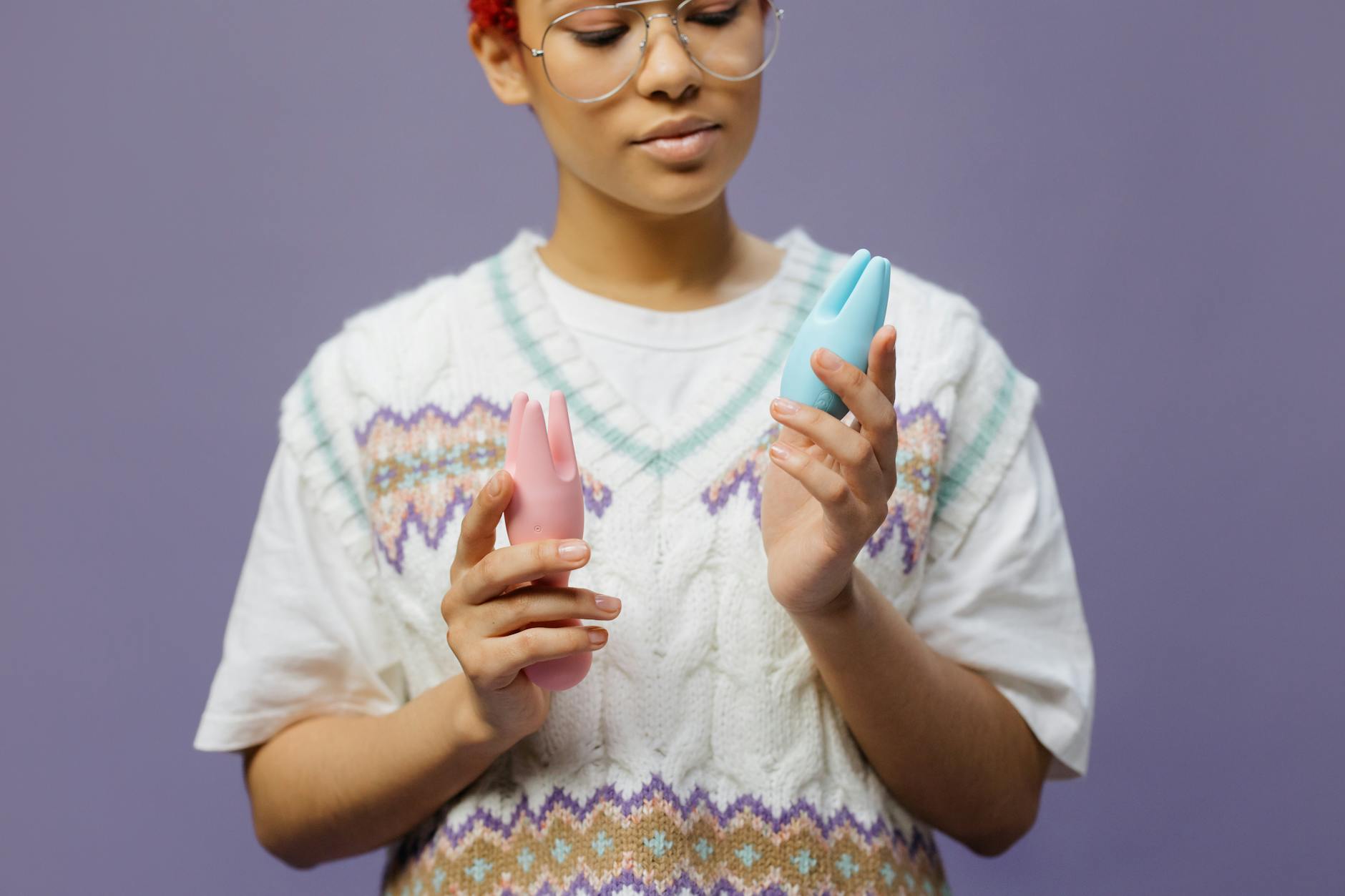
The arousal gap nobody talks about
Here's the thing: your partner leans in, you're thinking about the email you forgot to send. They touch your neck, you're mentally editing the grocery list. They suggest moving to the bedroom, and you're wondering if you even want to. This isn't you being broken. It's called the arousal gap, and it's wildly common.
Unlike your partner, your body doesn't flip a switch the moment they decide it's time. You need warm-up. You need transition time. You need your nervous system to shift gears. And if your partner is moving at their speed instead of yours, sex becomes a performance you're watching yourself do instead of something you're actually in.
Why the timing mismatch happens
Arousal isn't one thing. It's layered. There's spontaneous desire (the kind your partner might have), and there's responsive desire (the kind that builds once you're engaged). Most people with vulvas experience more responsive desire, which means you need stimulation, attention, and mental space to get there. Your partner might need five minutes. You might need twenty.
This gap widens when life is heavy. Stress, fatigue, kids in the next room, work deadlines still pinging on your phone. Your sympathetic nervous system (the fight-or-flight part) is still running, which means your parasympathetic nervous system (rest-and-digest, the sexy part) can't fully turn on.
Then there's the cultural layer. You've probably spent years learning to match your partner's pace instead of honoring your own. The compromise has worn a groove in your sexuality that's hard to undo.
The conversation you need to have first
Before you reach for a lemon vibrator, you need to tell your partner something. Not during sex, not in the moment. Sit down over tea or coffee and say: "My body takes longer to catch up than yours does. That's not rejection. That's just how I'm wired."
Then add: "I want to close this gap, and I have an idea. But it needs your patience and curiosity, not your performance."
Your partner might feel relieved. They might worry they're doing something wrong. They might realize they've been feeling the same pressure to perform that you have. Whatever comes up, make space for it. This conversation is the actual foreplay.
If your partner pushes back, if they make it about them or refuse to adjust pace, that's information. Couples therapy exists for exactly this reason. A good therapist can help you both understand why you each need what you need, and why slowing down actually makes sex better.
How lemon vibrators bridge the gap
This is where a lemon clitoral vibrator enters as a genuine tool, not a workaround. When your partner initiates and you're not there yet, you have three options: pretend you are, kill the momentum by asking for more time, or meet them halfway.
A lemon vibrator is option three. Here's how it works in real time.
Step one: Honesty with your partner. "I love that you want me. Give me ten minutes with my lemon to get my body on board. Then we'll be together." Your partner gets to stay engaged. They can undress, get comfortable, watch you, help you. Or they can grab a drink. The point is, you're not stalling. You're warming up.
Step two: Find the pattern that wakes you up. The Lem and other lemon suckers aren't like traditional vibrators. They use air-pulse stimulation instead of pure vibration, which means they feel fresher, more rhythmic. Start on a lower setting. The rhythm often matters more than intensity when you're trying to build arousal. Let your body respond to the sensation without pressure to perform.
Step three: Mental space. While your body is getting stimulated, your mind needs permission to shift. Put your phone away. Acknowledge that the work email exists but won't be answered in the next ten minutes. Maybe you put on music. Maybe you focus on your breath. Maybe you think about something that genuinely turns you on, not what you think you're supposed to want.
Ten minutes of this is often enough. Your nervous system shifts. Your blood pressure rises. Your genitals swell with blood flow. Your body signals readiness.
What happens when you come together
Now your partner's touch hits differently. You're not meeting them halfway anymore. You're actually present. The stimulation feels better because you're not bracing against it. Your partner notices. They get to experience you actually wanting them, not tolerating them.
This is where the arousal gap stops being a source of friction. It becomes rhythm. Your partner learned they can trust your "not yet" because "not yet" actually means "give me a minute." You learned that asking for time isn't selfish. It's the most intimate thing you can do.
Some couples find that once this dynamic shifts, the gap shrinks naturally. When your partner knows you're going to ask for what you need, they relax. That relaxation is arousing. It's contagious. After a few cycles of this, you might find yourself getting there faster just because the pressure's off.
Others find the gap stays exactly the same, and they stop caring. Because the issue was never the gap. It was the feeling that one person was wrong for not being like the other.
The patterns that work best
If you're starting with a lemon vibrator in this context, try these patterns:
Rhythm over intensity. Pattern 1 or 2 on the Lem works better than jumping to 5. Your nervous system will tell you when it wants more.
Consistency matters. Don't chase sensation. Let the sensation find you. This sounds mystical and isn't. It just means your body responds better when it's not performing.
External only to start. If you're working toward partnered sex, stick with clitoral stimulation for this warm-up. Internal stimulation can pull your attention inward, which can actually slow arousal for partnered sex.
Your partner can help. Once you're warmed up, they can hold your lemon clitoral vibrator for you. Or they can use it on you. This isn't about solo pleasure. It's about your body joining the encounter.
Honestly though, sometimes your partner initiates and you're just not feeling it. That's okay too. A lemon vibrator isn't a magic wand that manufactures desire you don't have. If you're bone-tired or stressed or just not interested, tell them. No vibrator required.
When this pattern isn't working
If you're consistently needing twenty or thirty minutes to reach arousal, or if your partner is consistently frustrated, there might be something else underneath. Low desire can be a sign of depression, medication side effects, hormonal shifts, or relationship disconnection. Those need different conversations and possibly professional support.
A good sex therapist or relationship counselor can help you figure out whether this is a timing mismatch you can work with, or whether something deeper needs attention. There's no shame in that. Most couples hit a point where they need a neutral third party.
The real win
The actual win isn't that you now use a lemon vibrator to close the arousal gap. The win is that you named the gap. You told your partner about it. You admitted that your body works differently than theirs. And instead of that being a problem, it became a conversation.
Once that conversation exists, the tools don't matter as much. You could use a lemon clitoral vibrator. You could use manual stimulation. You could use fantasy. The point is you're not pretending. You're not rushing. You're not fighting your own nervous system.
Your partner gets to experience you actually present, actually wanting, actually there. And honestly, that's what they wanted in the first place.
FAQ: Closing the arousal gap with lemon vibrators
How long should warm-up actually take?
There's no standard. Some people get there in five minutes. Others need twenty or thirty. The goal isn't to hit a time target. It's to shift from "I feel obligated" to "I actually want this." Time is usually just a marker for that shift. Once you understand your own pattern, you can communicate it to your partner. "I usually need about fifteen minutes" is way clearer than "I'm just slow."
Is it weird to use a vibrator with my partner watching?
No. And honestly, the first time might feel awkward (most things feel awkward the first time), but that awkwardness usually passes pretty fast. Your partner is watching you feel good. That's actually vulnerable and intimate. Many couples find that's when things get hotter.
What if my partner thinks I need a vibrator because they're not enough?
That's a misunderstanding worth clarifying directly. You could say something like: "A vibrator isn't about you. It's about my body needing a different kind of stimulation to get ready. Think of it like a warm-up before exercise. It helps me actually show up." If they're still struggling with it, that's worth exploring with a couples therapist, because the real issue is probably about control or performance anxiety.
Can I use a lemon vibrator with a partner even if we're not having intercourse?
Absolutely. A lemon clitoral vibrator is great for partnered play that doesn't involve penetration. Many couples use them during foreplay, during partner masturbation, or even during oral sex (you can switch off or use both). The vibrator isn't a substitute for your partner. It's an addition to what's already happening.
What if I reach arousal and my partner isn't in the mood anymore?
This is rarer than you'd think, but it happens. The solution is the same as any other mismatch: talk about it beforehand. "If I'm taking longer and you're feeling like the moment is passing, let's figure that out together." Sometimes your partner can step away and come back. Sometimes you finish your warm-up solo and reconnect later. There's no one right answer.
Should I be using my lemon vibrator before my partner initiates, so I'm already primed?
Some people love this. If you have five minutes of solo time before your partner comes home or before they suggest sex, getting yourself warmed up can close the gap instantly. Others find that solo arousal is completely different from partnered arousal and doesn't translate. Do what works for your body.