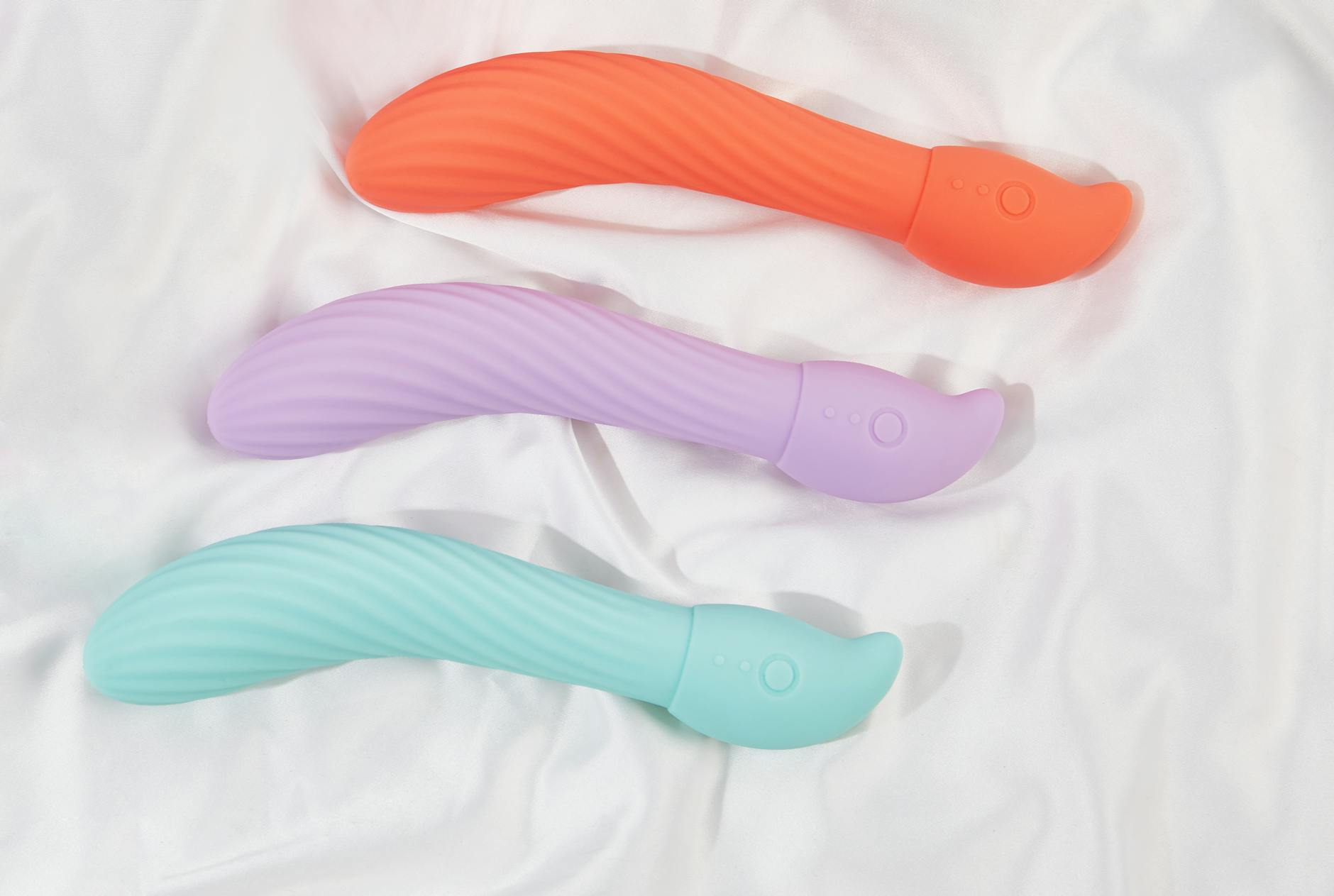
The thing nobody tells you about toys and partnerships
Most couples don't break out toys together because they're worried it'll feel clinical, or they'll hurt their partner's feelings, or suddenly the whole thing becomes a performance instead of actual pleasure. Between you and me, those fears are the biggest barriers. The actual logistics? That's the easy part.
After working with hundreds of couples navigating this, I've learned that introducing lemon vibrators or other clitoral toys into partnered sex works best when three conditions are met: honest conversation happens outside the bedroom, both people feel curious rather than pressured, and someone knows the actual mechanics before you're both half-dressed trying to figure it out.
Let's break down how to get all three in place.
Starting the conversation before you need it
The worst time to bring up toys is mid-sex when your partner is already vulnerable. The best time is casually, nowhere near the bedroom. Maybe during dinner, on a walk, or when you're both relaxed on the couch.
Here's what actually works: lead with your own desire, not your dissatisfaction. "I've been curious about trying one of those suction toys I read about" lands completely differently than "I feel like we need to spice things up." One of those is about exploration. The other sounds like a problem needs solving.
If your partner seems hesitant, pause there. Don't oversell it. Instead, ask what they're actually worried about. Most people fall into one of three camps: they think it means they're not enough (address this directly: toys amplify what you do together, they don't replace it), they think it'll feel weird or awkward (totally fair, new things do), or they're genuinely not interested right now (which is fine, and you can revisit later).
The best sex happens when both people feel genuinely curious rather than obligated.
Choosing the right toy for partnered use
Not all lemon vibrators work equally well during partnered sex. This matters. The Lemon clitoral vibrator from Hello Nancy, for example, uses suction rather than vibration, which means your partner can still feel what's happening and you get steady, hands-free stimulation. That's different from some vibrators that create more distance or require constant repositioning.
When you're choosing together (and I'd recommend doing this as part of your conversation), think about access. If penetration is part of your partnered experience, you'll want something that doesn't block entry or create awkward angles. Suction toys tend to work better here because they're compact and they stimulate from the outside.
If your partner is going to be involved in using the toy on you, size and grip matter. Some lemon adult toys are easier to hold and position than others. And if you want hands-free use, having a toy that can function solo lets your partner focus on other things.
Don't buy the most intense toy available. Start moderate. You can always increase intensity later, and you're less likely to overstimulate yourself when you're navigating both your own sensations and your partner's presence.
The actual logistics: positioning and communication
Let's talk mechanics, because this is where people get stuck. There's no single "right" position for using lemon vibrators with a partner, but there are some that work better than others depending on your setup.
If your partner is using it on you: This works best when you're able to relax and receive. That might mean you're lying down while they're beside you, or you're sitting partially reclined. Let them control intensity and pattern. Give real-time feedback: "a bit lower," "slower," "right there." This isn't performance feedback. It's navigation. Your partner needs to know what feels good so they're not just guessing.
If you're using it on yourself during partnered sex: Position matters for comfort. If penetration is involved, you'll likely want to be on top so you can angle the toy and keep control. If you're doing this during foreplay, lying down often feels less tense than sitting up. Start slow. You're introducing a new sensation while managing other sensations happening simultaneously, so give your nervous system time to integrate it.
If you want hands-free use: Some positions work better than others. Cowgirl (you on top, facing your partner) gives you control and lets them see what's happening. Spooning (you facing away, your partner behind) works if your toy sits comfortably against you. Lying on your back with your partner between your legs works if you're comfortable anchoring the toy there.
The common thread: communicate as you go. Not dirty talk (unless you want that), but actual information. "This angle feels better," "I need a second," "Can you try a different pattern?" That kind of thing.
Managing the mental piece (this is bigger than it sounds)
Even when couples say they're ready, there's often some self-consciousness the first time. You might feel weird having an extra object in bed. Your partner might feel awkward watching. That's completely normal and it usually passes in about five minutes once you're actually doing it.
Here's what helps: agree beforehand that the first time is an experiment, not a performance. You're not trying to have the best sex of your life. You're trying to figure out what this feels like, whether you like it, and what adjustments you'd make next time. That takes the pressure off immediately.
If at any point someone feels uncomfortable, you stop. No explanation needed. You can revisit it later, or you don't. Both are fine. But knowing you have an exit option usually means you'll feel more relaxed and actually enjoy it.
One thing I often recommend: laugh about it. New things are awkward. That's not a sign something's wrong. It's just part of learning something together. Couples who can find humor in the adjustment period usually have way better integration of toys into their regular sex life.
When to bring toys into different types of partnered sex
Introducing lemon vibrators or other clitoral toys works best at different moments depending on what you're usually doing.
During foreplay, toys work as an amplifier. Your partner can focus on other forms of touch while the lemon clitoral vibrator does its thing. This often feels less disruptive than trying to introduce it mid-penetration.
During penetration, the key is positioning so the toy doesn't interfere with entry. Front-facing positions (you on top, or lying on your back) often work better than rear-entry positions, just for logistics.
During mutual masturbation, toys can be incredibly hot because you're both actively present. Your partner watches and touches you while you use the toy on yourself, or vice versa. This often feels less "extra" and more like a natural extension of what you're already doing.
After penetration, using a lemon vibrator to reach climax is actually how a lot of couples integrate them most successfully. By the time you're here, everyone's already fully engaged and the toy just becomes the final piece.
Troubleshooting common friction points
Some partnerships run into the same few problems. Here's what actually helps.
If your partner feels threatened: This is usually about what the toy represents, not the toy itself. Sometimes it means "Does this mean I'm not enough?" Sometimes it means "Are you comparing me to some fantasy?" Neither is true, but saying that doesn't fix it. Instead, get specific: what does the toy let you experience that feels different, and why does that appeal to you right now? Usually it's about novelty, or intensity, or a type of sensation your partner's body can't provide. None of that means your partner is replaceable. It means you're expanding, together.
If you feel self-conscious: Especially common if you've never used toys before, or you've had partners who weren't into them. Remember: you deserve pleasure that feels good to you, not pleasure that looks a certain way. Your partner signed up to share this with you. That's actually really generous. Let yourself enjoy it.
If the toy isn't working the way you expected: Could be positioning. Could be that the pattern or intensity isn't right for you. Could be that you're tense because you're aware of your partner watching. All of these are solvable. Adjust, breathe, communicate. If it's genuinely not working, you can always return to whatever you were doing before. Not every experiment sticks.
FAQ
How do I know if my partner will actually be into using lemon vibrators together?
You won't until you ask. But couples who are curious about toys together usually have it in common: they're already pretty open about sex, they don't see pleasure as something to perform, and they're comfortable saying no to things without it becoming drama. If that sounds like your dynamic, there's a good chance your partner will at least be interested in trying. If your relationship has less open communication about sex generally, this is a great opportunity to build that.
What if my partner wants to use a lemon vibrator on me but I'm uncomfortable?
That's okay. You can explore it solo first so you know what it feels like. Or you can ask them to use it in a specific way (like only during foreplay, or only in certain positions). Comfort is a prerequisite. Your partner can be patient while you build that.
Can using toys damage partnered sex or make it less satisfying without them?
Not if you're doing it right. Toys shouldn't become a replacement for partnered touch. They're an addition. The couples I've worked with who integrate toys successfully still prioritize hands-on contact, conversation, and physical intimacy that has nothing to do with toys. Toys are one tool in a much bigger toolkit.
How do I keep using a lemon clitoral vibrator from becoming routine?
The same way you keep any sex life from getting boring: you stay curious. Try different settings. Use it at different times. Sometimes use it alone, sometimes with your partner. Sometimes focus just on the sensation, sometimes on eye contact and connection while you're using it. Novelty doesn't come from the toy. It comes from how you're paying attention.
What if I want to use a toy but my partner isn't ready?
Respect that timeline. You can ask what would help them feel more open to it, but don't pressure. In the meantime, you can absolutely explore toys on your own. Using them solo is how most people figure out what they actually like anyway. Your partner might become curious when they see how much you enjoy it. Or they might remain uninterested, and that's information you'll need to figure out together.
Is using lemon vibrators a sign we need help in our relationship?
No. Using toys is actually pretty normal in long-term partnerships. It's not a sign of trouble. It's usually a sign of curiosity and willingness to expand intimacy. That said, if the introduction of toys is happening because one partner thinks it'll fix a bigger disconnection, that's worth addressing separately. Toys don't fix communication problems. But they can be part of a much larger conversation about pleasure, desire, and staying connected.
The bigger picture
Integrating lemon vibrators into partnered sex isn't complicated, but it does require showing up with honesty. That means being honest about what you want, being honest about your insecurities, being honest when something doesn't feel right, and being willing to hear your partner's honesty too.
The couples who handle this well aren't the ones with no nervousness. They're the ones who feel the nervousness and do it anyway, because they're more interested in connection and shared pleasure than in looking perfect.
Your partner has already consented to being vulnerable with you. Talking about toys, exploring them together, and working through the awkward parts is actually just more of that same vulnerability, on deeper ground. And that's where the best partnerships live.
If you're ready to explore this and want support thinking through the conversation, reach out to Hello Nancy. You've got this.