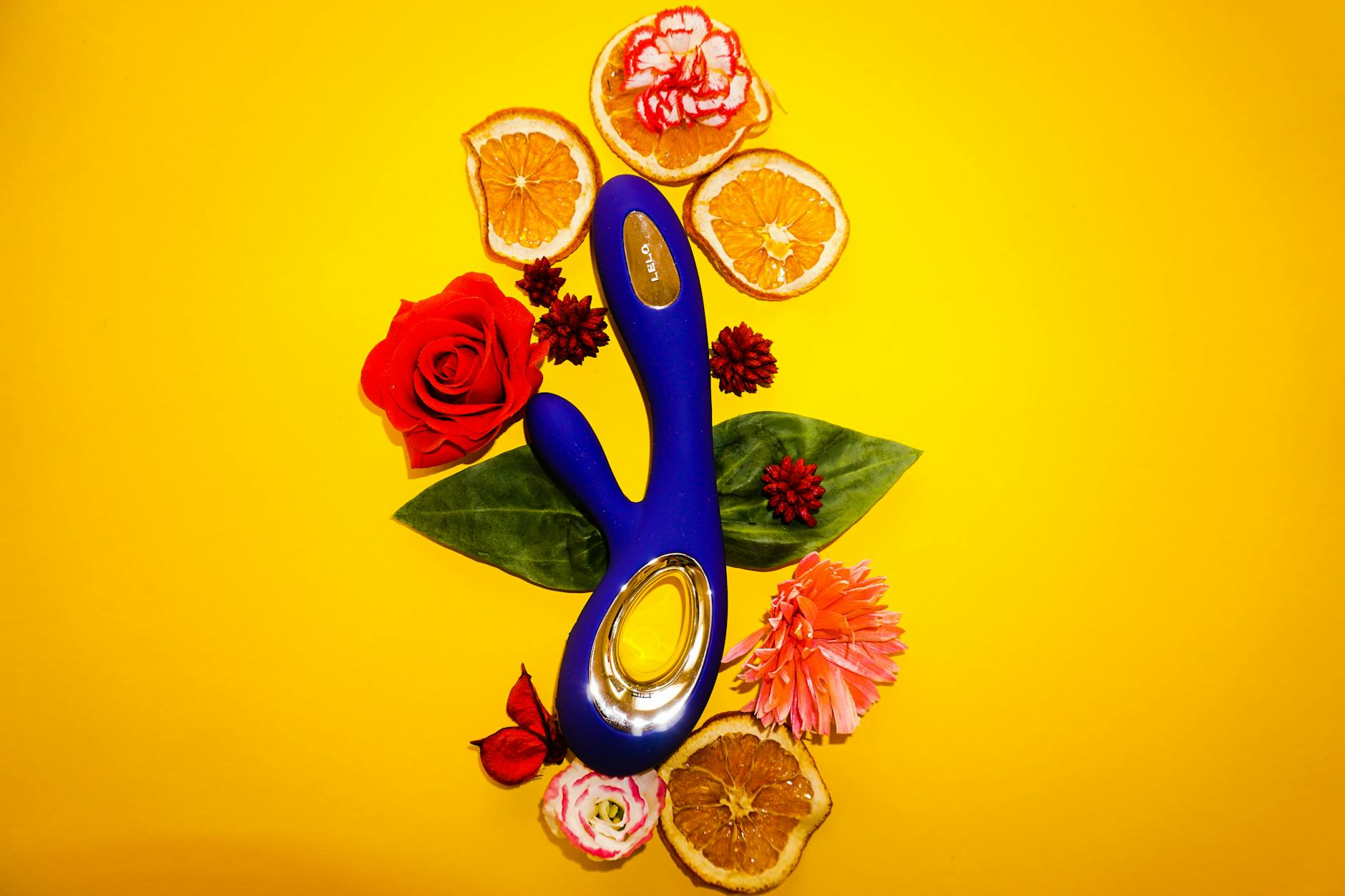
Let's start with the obvious part
Ovulation is not subtle. About 12 to 16 days before your next period, your body floods with hormones that make you want sex. Hard. This isn't a myth, a mood, or something sold in a wellness email. It's measurable, repeatable, and consistent enough that researchers have tracked it in hundreds of studies. And when you're experiencing it, a lemon vibrator changes everything because your body is primed for sensation in a way it isn't at other points in your cycle.
The reason this matters: most pleasure advice ignores your cycle entirely. But ovulation creates a distinct window where sensitivity spikes, arousal builds faster, and intensity feels different. If you're not timing your device use to match this peak, you're basically working against your own biology.
Why ovulation amplifies sensation
During your follicular phase (roughly from the start of your period to ovulation), estrogen climbs steadily. As it peaks, three things happen that make clitoral stimulation feel more intense and more satisfying.
First, blood flow to your genitals increases. Your tissues plump slightly, the clitoris becomes more engorged, and the nerves that feed sensation become more responsive. Think of it like turning up the volume knob on sensation itself.
Second, your brain chemistry shifts. Dopamine rises, which is your desire and reward chemical. This doesn't just make you want sex more. It makes pleasure feel sharper, more immediate. A pattern on a lemon clitoral vibrator that felt pleasant last week will feel intense this week.
Third, your pelvic floor changes tension. The muscles loosen slightly under higher estrogen, which allows for easier arousal and often stronger, more full-body orgasms. Less bracing means more sensation reaches deeper tissues.
The result: during ovulation, you're not the same person sexually that you are two weeks later. Your capacity for intensity, your speed to arousal, and the quality of sensation all shift upward.
When ovulation actually starts (and how to track it)
Here's where most cycle-tracking apps fail: they mark ovulation as a single day. It's not. Ovulation is a window, and your sexual peak often lasts longer than the ovulation event itself.
In a 28-day cycle, ovulation happens around day 14, but the high-estrogen window that creates that sexual surge typically spans about five to six days. For many people, the two to three days immediately before ovulation and the day after feel most intense.
You can track this with apps like Flo or Clue, but the most reliable signal is your body's own feedback: increased cervical mucus (it gets stretchy and clear), a slight temperature rise, and that unmistakable surge in desire. Some people also notice a shift in how their clitoris feels. It might feel more prominent, more sensitive, or swollen.
Once you know when your window is, you have a choice: use a lemon vibrator strategically during that peak, or keep using it the same way year-round and miss the opportunity entirely.
How to use a lemon vibrator during your peak window
Lemon clitoral vibrators work differently than internal vibrators because they use suction and pulse patterns rather than direct vibration. During ovulation, when your tissues are already engorged and sensitive, this matters more than you'd expect.
Start with lower intensity settings
During ovulation, your clitoris doesn't need much to wake up. Patterns one through three on a lemon sucker are usually enough. Many people who jump straight to patterns five or six at other times of their cycle find that during ovulation, lower patterns feel just as satisfying because your tissues are already doing half the work.
This also prevents overstimulation, which can happen more easily when estrogen is high. You want to build gradually, not max out in the first five minutes.
Allow longer warm-up than you expect
Here's the counterintuitive part: even though ovulation makes you want sex faster, arousal still builds better with patience. Five to ten minutes of lower-intensity stimulation allows your clitoris to fully engorge and your arousal to compound. Then intensifying feels more satisfying because you're working with tissues that are already fully responsive.
Rush it, and you get a quick release. Pace it, and you often get an orgasm that extends through your whole pelvic floor.
Experiment with patterns you skip other times
During ovulation, try the pulsing or wave patterns on a lem vibrator that might feel too subtle at other points in your cycle. Your heightened sensitivity means you'll feel the nuance in those patterns. Patterns that felt boring in your luteal phase suddenly become deeply satisfying.
Use it in partnership differently
If you have a partner, ovulation is when you have the most flexibility to involve clitoral stimulation in partnered sex. Your faster arousal and increased desire mean integrating a lemon vibrator during penetration is easier to coordinate and feels less like a workaround. Many couples find that adding a lemon clitoral vibrator during ovulation leads to mutual satisfaction that's harder to achieve at other times.
The pleasure shift you'll notice
During your non-ovulation times, orgasms might feel concentrated in your clitoris and immediate surrounding tissue. During ovulation, pay attention to how much deeper sensation spreads. For many people, ovulation orgasms extend into the uterus, pelvic floor, and sometimes up the spine. This isn't universal, but it's common enough that it's worth noticing.
This deeper sensation is partly because your tissues are more engorged and blood flow is higher. It's partly because your pelvic floor is less tense. A lemon vibrator during this window often triggers waves instead of peaks. That's not a different device. That's your body's cycle doing its job.
Photo by Ihsan Adityawarman on Pexels
Timing solo pleasure versus partnered sex
One practical question: should you use a lemon vibrator solo during ovulation, or wait for partnered time?
Honestly, both. Solo pleasure during ovulation gives you a baseline for what your peak sensation feels like. You learn the intensity level that works, the patterns that resonate, and how long you want to take. That knowledge transfers directly to partnered sex.
But partnered sex also feels different during ovulation because your partner is responding to your heightened desire. You might initiate more, come faster, or want to stretch the experience longer. All of that changes the dynamic in ways that solo exploration can't replicate.
The sweet spot for most people: use a lem vibrator solo during the first day or two of your ovulation window to explore and establish what feels best. Then, if you have a partner and want to, incorporate it into partnered time during the later days of your peak when you're most confident about what works.
Why tracking your cycle changes everything
Most people treat their sexuality like it's static. Same device, same patterns, same frequency, same intensity, year-round. But your body is a seasonal instrument. Ovulation is your high season.
Once you start timing a lemon clitoral vibrator to your cycle, you stop wondering why pleasure feels inconsistent. It's not inconsistent. You were using the same tool at different times of your biological season. That's like playing the same song on a piano and an organ and wondering why it sounds different.
If you're currently tracking your cycle for fertility or period symptoms, adding a pleasure note takes five seconds and teaches you something useful about your sexuality. If you're not tracking, an app like Flo or a simple calendar note takes barely any effort and gives you back data that helps you use tools like a lemon vibrator more effectively.
FAQ
How do I know if I'm actually in my ovulation window or if I'm just in a good mood?
Mood and desire are linked but distinct. A good mood might last days. Your ovulation sexual surge is usually more peaked and more clearly tied to physical sensation (clitoral engorgement, cervical mucus change, heightened sensitivity to touch). If you're tracking your cycle in an app, cross-check the timing. If the peak desire aligns with day 12-16 of your cycle, it's probably ovulation. If it's random or inconsistent, it might be something else (stress relief, relationship moment, medication change). Both are valid. Only one is tied to a biological window you can predict.
Can I use a lemon vibrator every day during my ovulation window or do I need days off?
You can use it daily if you want. There's no limit to clitoral stimulation. Some people find that using a lemon clitoral vibrator daily during ovulation intensifies sensation because tissues stay engorged. Others find that taking one day off in the middle of their peak window allows tissue sensitivity to reset and the next session feels sharper. Track what works for your body. This isn't about rules. It's about information.
Does ovulation amplify pleasure differently if I'm on hormonal birth control?
Yes. Hormonal birth control suppresses the ovulation surge by flattening your estrogen and progesterone curves. If you're on the pill, patch, or ring, your cycle-based pleasure peak is usually much subtler or entirely absent. Some people still notice a slight shift around the placebo week, but it's not the same as a natural cycle. If you're curious about the full cycle-based pleasure variation, talking to your doctor about tracking your cycle during a natural month (or considering a non-hormonal method) gives you actual data about your baseline.
If I love how sex feels during ovulation, is it normal that other times feel less exciting?
Completely normal. You're comparing the peak of your cycle to the valleys. This is where some people get frustrated: they think they're broken because sex doesn't feel as good in their luteal phase (after ovulation). You're not broken. You're normal. Your body is literally built to feel sexual pleasure more intensely at one point in your cycle. Accepting that, rather than expecting consistent intensity year-round, actually improves your overall sexual satisfaction.
Should I tell my partner about my ovulation window and lemon vibrator use?
That depends entirely on your relationship agreements. Some couples love this information because it helps them plan and understand desire shifts. Others find that timing sex around ovulation feels too clinical. Neither is wrong. If you share, you might say something like, "I've noticed my desire and sensation peak mid-cycle. Would you be interested in timing some of our intimate time around that?" If you prefer to keep solo exploration private, that's equally valid. Your cycle data is your own.
What if my ovulation window doesn't match the textbook 12-16 day timing?
Welcome to real human biology. Cycle lengths vary, ovulation timing varies, and the length of your high-estrogen window varies. Track for three cycles to see your actual pattern rather than relying on what an app predicts. Some people ovulate on day 10, others on day 18. Some have a five-day peak, others have three. The app is a starting point, not truth. Your body's feedback is more reliable.
What's next
Start tracking your cycle if you're not already. Note when you feel the sexual surge and how it feels in your body. Use a lemon vibrator during that window and pay attention to whether sensation is different than other times. You don't need to do anything with this information except notice it. But once you know your body's peak, you have an option you didn't have before: to work with your cycle instead of against it.
Your pleasure deserves that kind of attention. If you want personalized guidance on integrating cycle awareness into your sex life, reach out to us. We're here to help you understand your body's rhythms, not judge them.
Ready to explore further? Check out our guide on how clitoral sensation varies throughout your cycle and how to use lemon vibrators when arousal takes longer to build for complementary perspectives on cycle-aware pleasure.