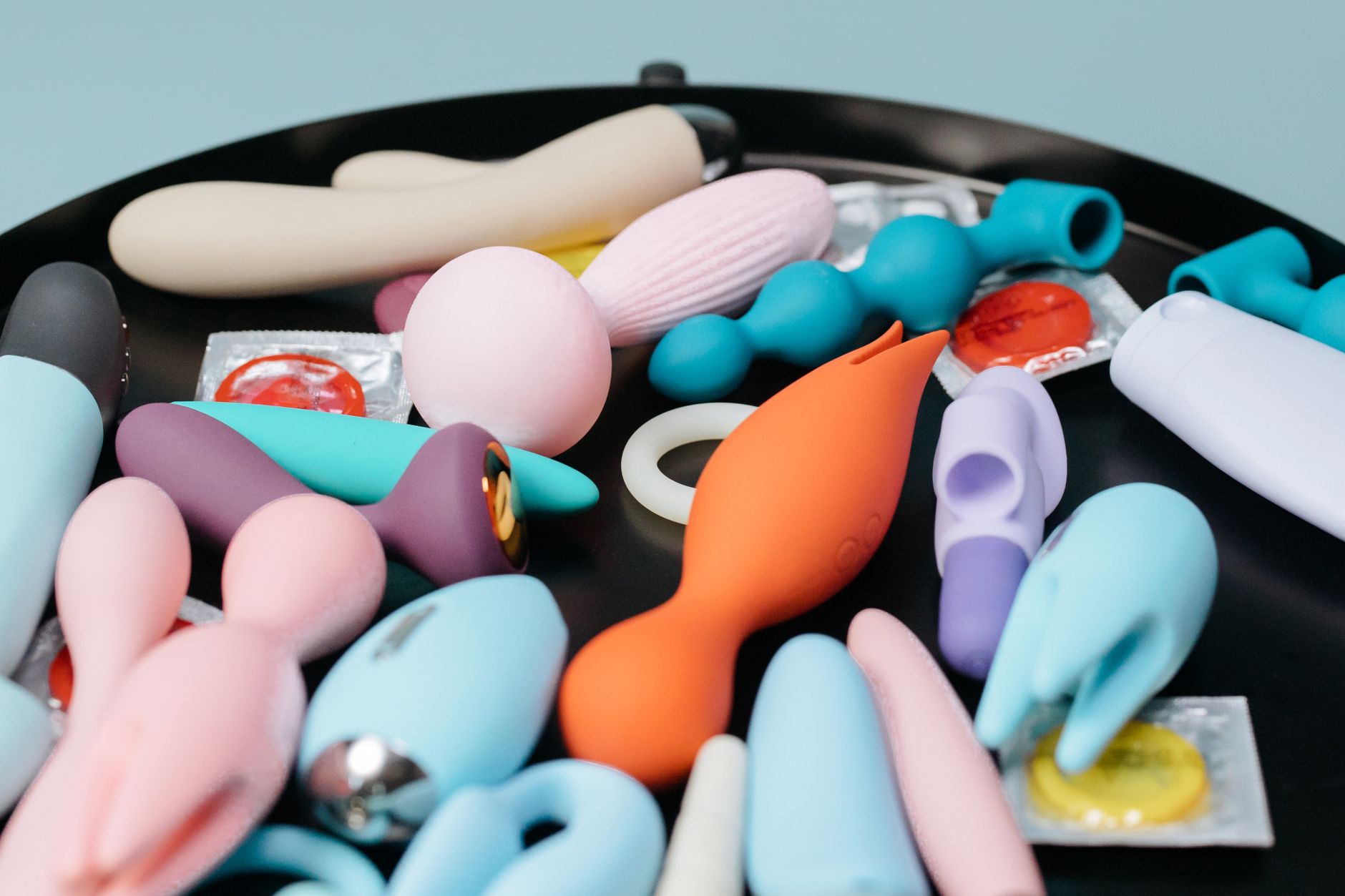
Your body's been on pause. Now it's waking up.
You stopped taking the pill, and suddenly nothing feels the same. Maybe your orgasms disappeared. Maybe your skin cleared up and your mood steadied, but your clitoris feels like a stranger. Or maybe you're noticing phantom sensations, random arousal, mood swings, or a libido that's either nonexistent or turned up to eleven.
This is normal. Your endocrine system spent months (or years) running on synthetic hormones. Now it's recalibrating. And the pleasure changes? Those are real, measurable, and entirely fixable.
Here's what's happening and how lemon vibrators specifically help during this transition.
Why the pill mutes sensation in the first place
Hormonal birth control suppresses ovulation by keeping estrogen and progesterone levels artificially steady. That stability prevents pregnancy, but it also dampens the hormonal fluctuations that normally drive arousal and genital blood flow.
Darwin Smith at Yale found that people on combined oral contraceptives (the standard pill) show measurably reduced genital arousal during erotic stimuli. Not because they're less interested. Because the hormonal signals that fuel sensation are chemically dampened.
There's more. The pill also changes vaginal and clitoral tissue. Lower estrogen means less blood flow to the genitals. Less blood flow means less engorgement, less sensitivity, sometimes a feeling of numbness or distance from sensation. Some people describe it as watching their pleasure happen rather than feeling it.
Add the psychological layer. Being on the pill often means you've been in a specific mindset about your body, fertility, and sex for years. Coming off it can surface feelings you'd suppressed or never noticed.
What happens in the first month after stopping
Days 1-7: hormone levels crash. Your brain notices the absence of synthetic hormones immediately. Some people feel relief (clarity, mood lift). Others feel untethered (anxiety, low energy). Your libido might plummet or spike unpredictably.
Weeks 2-4: your natural cycle begins reasserting itself. Estrogen and testosterone levels rise. Blood flow to your genitals increases. This is when sensation starts returning. But it can feel strange, overstimulating, or completely muted depending on your baseline.
Weeks 4-8: your nervous system recalibrates. If you ovulate, progesterone enters the equation. You might notice cyclical changes in arousal, orgasm intensity, or lubrication for the first time in years.
Most people don't feel fully recalibrated for three to four months. Some take longer.
Why lemon vibrators work better during this transition
Lemon clitoral vibrators (like the Lem) use suction and pulsing rather than vibration. This matters during hormonal recalibration.
When your tissues are regaining sensitivity, traditional vibrators can feel overwhelming or produce a numb, buzzy sensation that doesn't translate to pleasure. Suction-based toys work differently. They engage the clitoris indirectly, drawing tissue upward and stimulating the neural network without direct friction. It's gentler on recalibrating tissue, and it often works better for sensation that's been dampened or destabilized.
Second, the suction action mimics the kind of stimulation that actually increases blood flow fastest. Your genital tissues need that blood flow to rewaken. Suction toys trigger the physiological response you need right now more reliably than standard vibration does.
Third, lemon vibrators give you incremental control. You can start on a low pulse pattern and gradually work up, matching your nervous system's ability to process sensation day by day. That graduated approach is exactly what most people need during hormonal transition.
The first two weeks: what to expect and how to start
Don't expect your old baseline immediately. Your genitals are basically running on new instructions.
Start with the Lem on pattern 1 or 2. Spend 15-20 minutes in foreplay before you touch it. Longer warm-up time helps your body produce natural lubrication and allow blood flow to build. If you're experiencing dryness (very common coming off the pill), use a water-based lubricant. Your tissues are recalibrating, not broken.
Pay attention to what feels novel. You might feel sensation in places you never noticed before, or discover that a certain pattern triggers something intense. Write this down mentally. These small discoveries tell you where your recalibration is happening.
Don't chase orgasm the first week or two. The goal is sensation, not completion. That paradoxical shift from goal-oriented to sensation-focused often unlocks orgasm faster than pushing for it.
Weeks three through eight: building consistency
By week three, your natural hormones are meaningfully elevated. You might notice your body responding faster. Arousal might come easier, or it might still feel far away. Both are fine.
Now is when you can start increasing intensity. Move from pattern 1 to pattern 3. Explore what happens when you hold the Lem at different angles, move it slowly, or pulse it. Your nervous system is learning how to process sensation again. Give it different inputs.
Honestly though, some people find their best orgasms come from consistency, not variation. Pick a pattern that works and use it for several sessions. Your nervous system builds a stronger pathway through repetition.
If you're in a relationship, this is the moment to have a conversation separate from sex. "My body is recalibrating from the pill" is not the same conversation as "I want us to connect differently." Keep them separate. One is hormonal. One is relational. Confusing them makes both harder.
The mood piece (because it's not all physical)
Coming off hormonal birth control often triggers an emotional release. Anxiety, grief, rage, or deep sadness can surface. This isn't weakness or a sign the pill was masking depression. It's your full neurochemistry coming back online.
Pleasure and mood live in the same neural neighborhoods. If you're experiencing emotional volatility, your capacity for sensation and orgasm will fluctuate too. This is completely normal and usually resolves within a few months.
If you're experiencing depression or severe anxiety, talk to your doctor. Some people genuinely do need support during this transition. That's not failure. That's wisdom.
What to watch for
If pain shows up during or after using a lemon vibrator, stop. Pain is information. It might mean you're going too intense too fast, or it might indicate a pelvic health issue that needs attention. Either way, see a pelvic floor physical therapist.
If sensation never returns after three months, that's worth discussing with a gynecologist. Most people regain baseline sensation within that window, but some don't, and that's usually fixable with targeted attention.
If you notice persistent numbness or an inability to orgasm after four months, mention it at your next checkup. It's rarely a permanent side effect of the pill, but it's worth ruling out other factors.
The bigger picture
Coming off hormonal birth control is a recalibration, not a recovery. You're not broken during this transition. You're just operating on new hormonal instructions.
Lemon vibrators work during this window because they meet your tissue where it actually is: in flux, rebuilding sensitivity, learning to respond again. They don't force sensation the way traditional vibrators sometimes do. They coax it back.
Most people emerge from this transition with stronger self-awareness about their pleasure, better ability to articulate what they need, and often more intense orgasms than they had on the pill. The transition is awkward. What comes after it is often better.
People also ask
How long does it take for sensation to return after stopping the pill?
Most people notice meaningful changes within 4-8 weeks as natural hormone levels rise and blood flow to genital tissue increases. Full recalibration usually takes 3-4 months. Some people take longer, especially if they were on the pill for many years. The timeline varies wildly depending on your individual physiology, stress levels, and baseline sensitivity.
Can I use a lemon vibrator immediately after stopping the pill?
Yes, but start gently. Your tissues are sensitive while they're recalibrating. Use the lowest pattern settings for the first few weeks, prioritize foreplay and lubrication, and pay attention to how your body responds day by day. Think of it as a gradual reintroduction rather than a full-force approach.
What if I feel no sensation at all when I use a lemon vibrator after stopping the pill?
That's common in the first 1-2 weeks. Your nervous system is still processing the hormonal shift. Give it time. Increase foreplay duration, use lubricant generously, try different patterns and angles, and revisit it in a few days. If numbness persists beyond 4 weeks, talk to your doctor. It's usually temporary, but it's worth checking.
Are lemon vibrators better than traditional vibrators during hormonal transition?
For most people in the immediate post-pill window, yes. Suction-based stimulation (like the Lem) is gentler on recalibrating tissue and often produces sensation faster than traditional vibration. That said, every body is different. Some people find vibration works fine. The key is paying attention to what feels good and adjusting based on your own feedback.
Will my orgasms change permanently after I stop the pill?
Probably yes, but usually in a good way. Many people report stronger orgasms, faster arousal, and easier sensation after the pill leaves their system. Others notice their orgasms feel different (more clitoral versus blended, or vice versa). These aren't losses. They're shifts. You're rediscovering what your unmedicated body actually feels like.
What if I want to restart hormonal birth control? Do I have to go through this recalibration again?
No. If you restart the pill, your sensation will shift back within a few days to a week. The pattern is reversible, which is actually reassuring. If you decide the pill works better for you, you can go back on it. If you prefer your post-pill body, you know that's an option too.
The main thing
Your body isn't broken. It's recalibrating. That recalibration is awkward and sometimes uncomfortable, but it's also an opportunity to learn what pleasure actually feels like without pharmaceutical dampening. Lemon vibrators are a practical tool during that window. They don't force sensation. They help coax it back.
If you're struggling with this transition, you're not alone. Talk to your doctor, be patient with your body, and trust that most people emerge from this with a stronger, more direct relationship to their own pleasure.
If you want to explore this more deeply, our guide on how to rebuild pleasure after major life changes covers the relational side of hormonal shifts. You might also find using lemon vibrators for clitoral numbness helpful if sensation feels particularly distant right now.
Your pleasure matters. Give yourself grace during the transition.